The Fuchi - Parts of a Japanese Katana
The fuchi is the metal collar fitted at the front of the tsuka, or handle, of a Japanese sword. It sits directly beside the tsuba and forms the transition point between the sword's guard assembly and the wrapped grip. Small in size but important in function, the fuchi helps reinforce the mouth of the handle, gives the tsuka a clean finished edge, and often serves as one half of the matched fuchi-kashira set.
For many collectors, the fuchi is one of the most overlooked parts of a katana. It does not attract attention as quickly as a tsuba, and it is less immediately obvious than the kashira at the end of the handle. Yet the fuchi is one of the best places to study the quality of a sword's mountings. It combines structural purpose, precise fit, and artistic refinement in a single fitting only a few centimetres wide. On a simple working sword it may appear restrained and practical. On a high-end mounting it can carry rich carving, fine nanako, coloured metalwork, and motifs that continue across the entire handle.
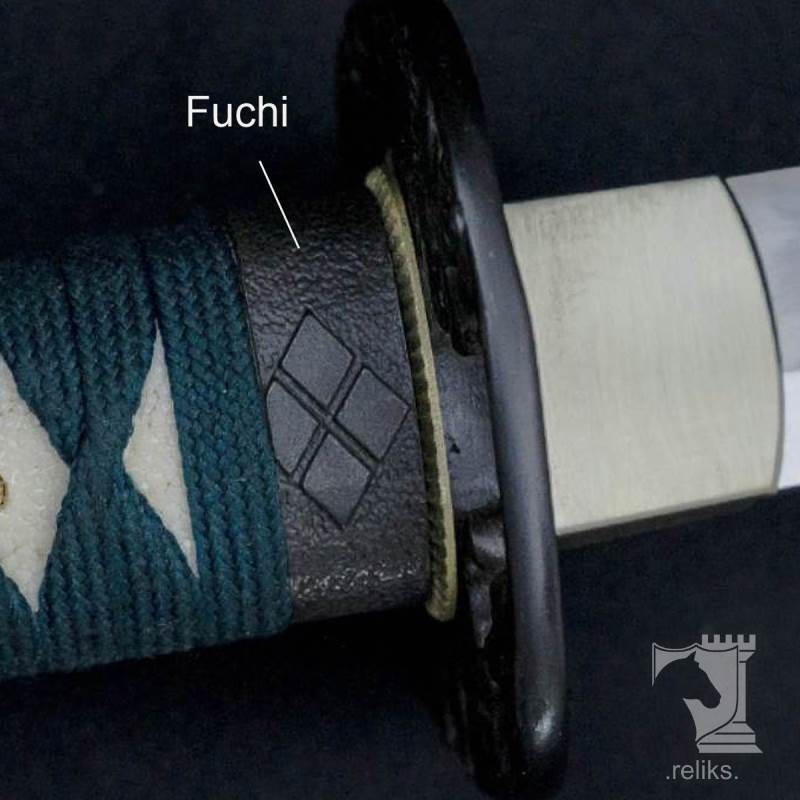
Fuchi is the metal collar fitted at the front of the tsuka or handle, of a Japanese sword
What Is the Fuchi on a Katana?
The fuchi is the fitted collar mounted at the front of the tsuka, just behind the seppa and tsuba. In practical terms, it is the ring-like fitting that caps the opening of the handle where the wooden core meets the guard assembly. It frames the beginning of the grip and gives the front of the tsuka a strong, finished edge.
In Japanese sword mountings, the fuchi is more than decorative trim. It is a functional part of the handle assembly. Because it sits at a high-stress point where the grip meets the rest of the sword, it helps strengthen the front of the tsuka and provides a precise mounting surface for the wrapped handle.
If the kashira completes the end of the handle, the fuchi marks where the grip begins. That makes it one of the most important transition points in the entire koshirae.
Where the Fuchi Sits on the Sword
Understanding where the fuchi sits is one of the easiest ways to understand its purpose. Moving from blade toward the handle, the order of the mounted parts is generally the blade, habaki, seppa, tsuba, seppa, and then the fuchi, followed by the tsuka itself. The fuchi effectively frames the mouth of the handle and visually separates the wrapped tsuka from the metal fittings at the guard.
Because it sits at this exact junction, the fuchi plays both a structural and visual role. It helps keep the handle looking tight and intentional, and it prevents the front edge of the wooden tsuka core from appearing raw or vulnerable.
What Does the Fuchi Actually Do?
The fuchi performs several important jobs despite its modest size.
It reinforces the mouth of the tsuka. The wooden handle core must fit securely around the tang of the blade. The front opening of that core is a vulnerable point, and the fuchi helps protect and strengthen it.
It creates a clean transition from tsuba to grip. Without the fuchi, the front of the handle would look unfinished. The fitting gives the sword a strong visual break between the guard assembly and the wrapped tsuka.
It supports the handle wrapping. The first turns of the tsuka-ito begin just behind the fuchi. This means the fitting helps establish the front edge of the wrap and gives the grip a more secure and refined finish.
It adds durability. At a point where pressure, handling, and wear naturally concentrate, the fuchi protects the mouth of the tsuka from damage and splitting.
This practical role is one of the main reasons the fuchi deserves its own study. It is not simply decorative metal at the front of the handle. It is one of the fittings that helps make the tsuka a complete and durable unit.
Why the Fuchi Matters to Collectors
The fuchi is one of the most revealing fittings on a Japanese sword because it combines fit, construction, and decoration in one small piece. A collector can learn a surprising amount from it.
A well-made fuchi usually shows crisp edges, controlled shaping, and a close relationship to the rest of the handle furniture. It can reveal whether the sword was mounted with care, whether the maker paid attention to the transition between metal and wrapping, and whether the fittings were designed as a coordinated set. Poorly made examples often look cast, soft, or disconnected from the rest of the mounting. Good ones feel intentional, precise, and integrated.
Because the fuchi is often handled and viewed closely, it is also one of the best places to appreciate Japanese metalworking on a practical object. Even when a sword is mounted simply, the fuchi often shows whether the maker understood restraint, proportion, and detail.
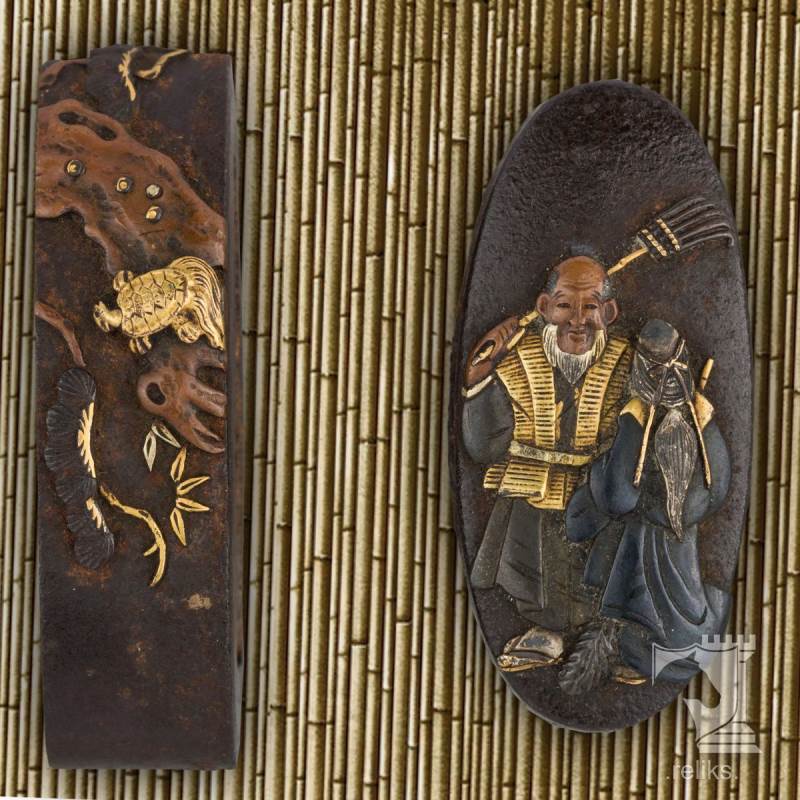
An original antique fuchi-kashira set*
The Fuchi-Kashira Set
In traditional Japanese sword furniture, the fuchi is frequently paired with the kashira, the cap at the end of the handle. Together they form the fuchi-kashira set, one of the most important matched fittings on the sword.
These paired fittings often share the same metal, surface finish, and decorative theme. The fuchi may show the beginning of a design while the kashira completes it. A branch may begin at the front of the tsuka and continue to the end cap. Birds may appear on one piece and flowers on the other. A mythological figure may occupy the fuchi while a related symbol or secondary subject appears on the kashira.
For collectors, a strong fuchi-kashira set creates visual unity across the handle. It turns the tsuka from a simple wrapped grip into a carefully framed composition. This is one of the reasons antique matched sets are so admired. They reflect the Japanese preference for harmony between fittings rather than isolated decoration on individual parts.
Materials Used for Fuchi
The range of materials used for fuchi reflects the sophistication of Japanese sword furniture as a whole. Even though the fitting is small, it could be made from a variety of metals and alloys depending on the level of the sword and the taste of its owner.
Shakudo was one of the most prized materials. This copper-based alloy, finished to a deep blue-black or purple-black patina, created a dramatic dark ground that made gold and silver details stand out beautifully.
Shibuichi, a copper and silver alloy known for its subtle grey tones, was also used to great effect. It gave fittings a softer and often more understated character.
Copper appears frequently in both plain and decorated fuchi, while iron examples often lean toward a more restrained, martial look. On more elaborate pieces, artists added details in gold, silver, and contrasting alloys to create scenes with real depth and variation.
Because the fuchi sits at the front of the handle where it is handled, seen, and framed by the tsuba, the choice of material affects not only its beauty but its entire presence on the sword.
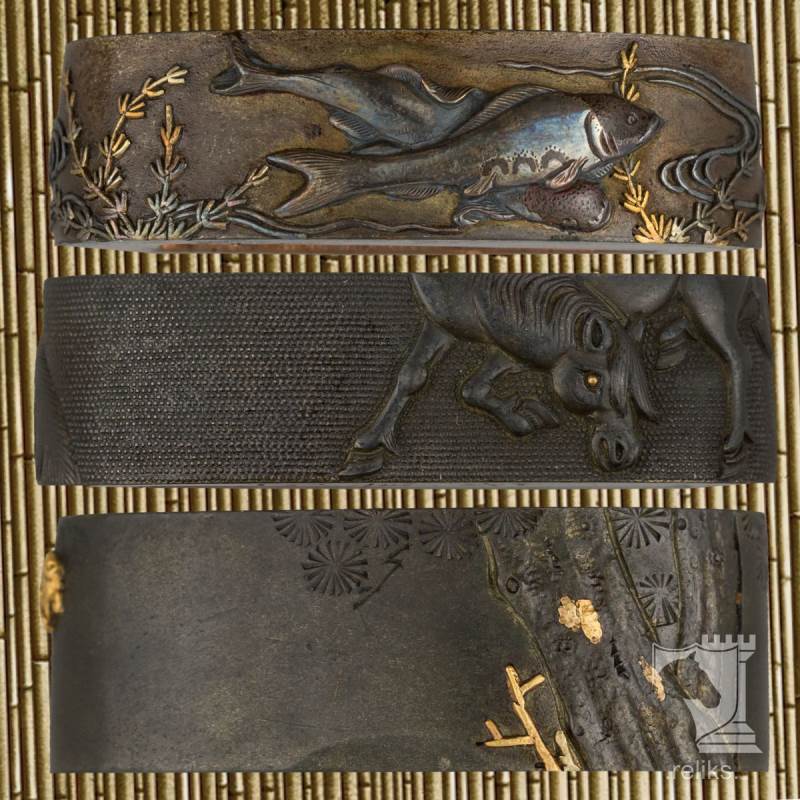
Antique fuchi showing Iroye - Mixed-Metal Decoration, Relief carving and Nanako*
Decorative Styles Found on Fuchi
The fuchi gave Japanese fittings artists a narrow but expressive surface on which to work. Over time it became a place for refined metal decoration ranging from minimalist to highly ornate.
Nanako
One of the most refined surface treatments used on fuchi is nanako, a beaded texture made up of countless tiny punched dots. On shakudo especially, nanako creates a rich, shimmering background that elevates the entire fitting. This texture is often used behind raised designs so that birds, flowers, waves, or figures stand out more clearly.
Relief Carving
Many fuchi feature relief decoration, where the design rises above the background surface. This can be shallow and elegant or deeply sculptural depending on the school and artist. Relief work gives the fitting a sense of depth and life, transforming a simple collar into a miniature metal sculpture.
Iroye and Mixed-Metal Decoration
On higher-end examples, craftsmen combined several metals and patinas to create a coloured picture effect known as iroye. Gold, silver, copper, shakudo, and shibuichi could all appear on the same piece, producing subtle tonal contrasts without the use of paint. This made the fuchi feel less like hardware and more like jewellery for the sword.
Plain Iron and Restrained Warrior Mounts
Not every fuchi was lavish. Many were intentionally restrained. Plain iron or simply decorated soft-metal fuchi can have a quiet authority that suits a more martial or understated sword. In such pieces, quality is often seen not in rich ornament but in fit, patina, proportion, and clean finishing.
Common Themes and Motifs
Because the fuchi is often paired with the kashira and other fittings, its themes are closely connected to the broader decorative world of Japanese sword furniture. A great many motifs appear repeatedly across antique examples.
Nature themes are especially common. Flowers, grasses, bamboo, waves, and seasonal plants appear frequently, often carrying poetic or symbolic meaning.
Birds and animals are also popular. Sparrows, swallows, cranes, shorebirds, dragons, and shishi all appear on fuchi. These could suggest vigilance, prosperity, seasonal beauty, strength, or protection.
Mythological and religious subjects also appear, especially on more elaborate fittings. Temple guardians, gods of fortune, heroes, sages, and folklore characters gave the sword deeper symbolic identity and could reflect the owner's taste or aspirations.
Because the fuchi is positioned so prominently at the front of the handle, even a small motif can make a strong impression.
Why Edo Period Fuchi Became So Artistic
Many of the finest fuchi seen in collections today date from the Edo period (1603-1868). During this long era of relative peace, swords remained powerful symbols of status, identity, and culture, but fittings evolved beyond purely battlefield needs.
As sword furniture developed artistically, the fuchi became one of the key places where metalworkers could display refinement. Its narrow form challenged the artist to create balanced compositions in a limited space. The result was often extraordinary. By the late Edo period, some fuchi were so delicately worked that they feel closer to fine personal ornament than to simple structural hardware.
This does not diminish their function. It highlights the remarkable Japanese ability to unite practical design with artistic sophistication. The fuchi still reinforced the tsuka and framed the grip, but it also became a place for subtle luxury and masterful craftsmanship.
How to Spot a Better Fuchi
If you are comparing antique fittings or evaluating a mounted sword, the fuchi offers several clues to overall quality.
Look at the fit. A strong fuchi should appear cleanly integrated with the tsuka and should not look loose, awkward, or oversized.
Study the edges. Well-made fuchi usually have crisp borders and deliberate shaping. Soft, rounded, or muddy details can signal lower-quality casting or finishing.
Examine the interior and opening. On better pieces, the inner walls and openings show precision and intention rather than roughness. This is often overlooked, but it tells a great deal about workmanship.
Check the relationship to the kashira. If the sword has a matched fuchi-kashira set, the two pieces should feel related in motif, scale, and finish.
Consider the surface. Crisp nanako, well-controlled relief, thoughtful inlay, and good patina all suggest higher quality. Even a plain fuchi can be excellent if the shape, finish, and proportion are right.
Fuchi on Antique Swords vs. Modern Reproductions
One of the easiest ways to tell a refined antique-inspired fitting from a cheaper reproduction is to compare the treatment of the fuchi. On mass-produced pieces, the fuchi is often treated as little more than a decorative ring. It may be overly thick, weakly cast, or disconnected from the rest of the tsuka furniture.
On better reproductions and antique examples, the fuchi feels like a necessary architectural part of the sword. It fits naturally with the tsuba and the wrap, and its decoration, whether simple or rich, feels proportionate to its role. This is why experienced collectors often look closely at the fuchi early in their assessment. It tells them whether the sword's details were understood or merely copied.
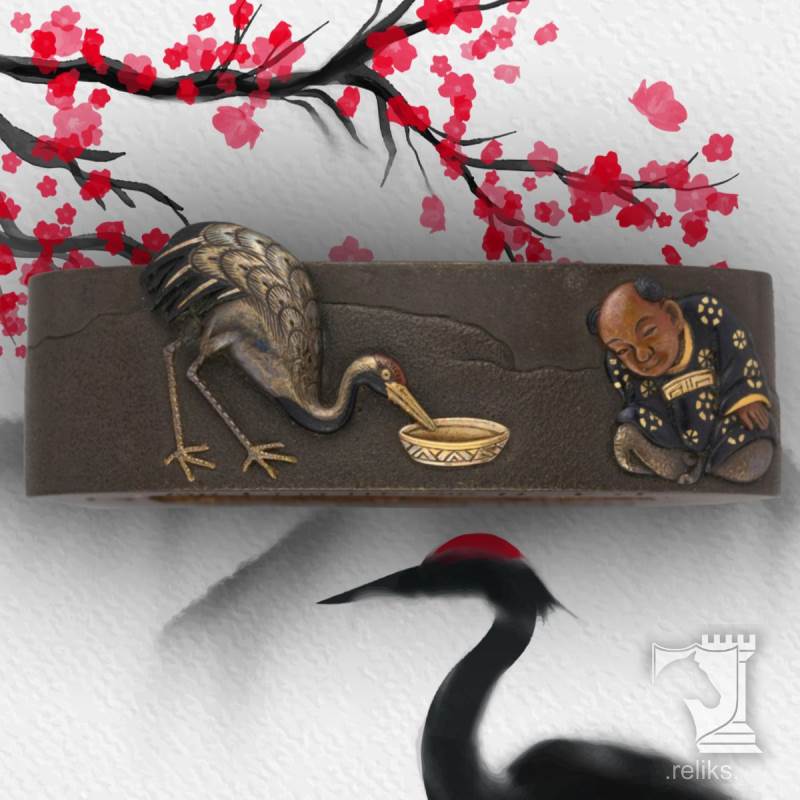
The Fuchi - Parts of a Japanese Katana
The Fuchi as the Beginning of the Grip
A useful way to think about the fuchi is as the point where the sword's grip truly begins. It is the first fitting of the tsuka and the collar that defines the front boundary of the wrapped handle. Every turn of the tsuka-ito behind it, every visual line along the grip, and every transition from guard to handle depends in some way on that little metal collar doing its job well.
This is why the fuchi deserves more attention than it often receives. It is one of the quiet structural heroes of Japanese sword mounting, and in the best examples it is also one of the most refined artistic surfaces on the entire sword.
Final Thoughts
The fuchi may not be the largest or most dramatic part of a Japanese sword, but it is one of the most important. It reinforces the mouth of the tsuka, creates a clean transition from tsuba to grip, supports the visual structure of the handle, and often serves as one half of a beautifully matched fuchi-kashira set. Whether plain and practical or richly decorated with nanako, relief carving, and mixed-metal detail, the fuchi reveals how carefully a sword was mounted and how strongly Japanese craftsmanship valued both function and beauty.
For collectors, learning to notice the fuchi is an important step in learning how to read a sword. It is not just a collar at the front of the handle. It is the fitting that begins the grip, frames the tsuka, and quietly tells you how much care went into the sword as a whole.
*Images marked with an asterisk are historical reference images sourced from public-use museum or public-domain collections, including The Metropolitan Museum of Art Open Access collection.
Examples of Fuchi found at Reliks.com
These photo's are an example of Fuchi found on Japanese katana forged today.
 The newly re-tooled furniture includes a refreshed tsuba, fuchi, kashira, and menuki, giving the sword a crisp and clean appearance inspired by early versions of this classic design.
See more of the Practical Pro Elite Katana Rich iron fittings display the elegant dragonfly motif that defines the series.
See more of the Dragonfly Wakizashi w/Katana Handle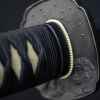 The blackened tsuba, fuchi, tsuka-ito and fuchi-kashira contrast the real white same (rayskin) handle and the black textured lacquered saya.
See more of the Winter Sun Samurai Sword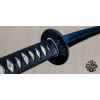 Continuing the tradition XL Series of katana blade geometry, our new cutter features the billowing clouds and raimie (thunderclap) theme from fuchie to kashira. With a double pegged and fully removeable tsuka (handle) with synthetic components around the wood core.
See more of the Raimie XL Katana The dragonfly kashira, along with the fuchi (hilt collar), reinforces the tsuka and provides a point for the handle wrapping (tsukaito) to tie off.
See more of the Hanwei Dragonfly Katana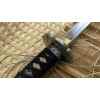 Tomoe symbols, representing strength and spiritual motion adorn the fuchi and kashira.
See more of the Tomoe and Crane Katana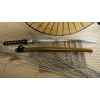 Tomoe symbols, representing strength and spiritual motion adorn the fuchi and kashira, while elegant crane motifs, symbolizing longevity and grace, decorate the tsuba and included kogatana (small utility knife).
See more of the Tomoe and Crane Katana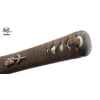 The fuchi and kashira are lightly textured and gentle to the touch
See more of the Wolf Katana The fuchi and kashira are lightly textured and gentle to the touch
See more of the Wolf Katana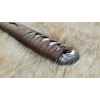 The fuchi and kashira are lightly textured and gentle to the touch
See more of the Wolf Katana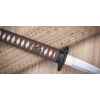 The tan tsuka-ito (handle wrap) offests the blackened fuchi and fuchi-kashira on the double mekugi (bamboo pin) pinned handle.
See more of the Ginkgo Leaf Katana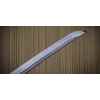 The blackened fuchi, kashira and ornate stainless cherry blossom tsuba accent the beautiful polish and differentially tempered 27 1/4" blade.
See more of the Sakura Katana