Makidome: The Final Knot of Japanese Sword Handle Wrapping
In Japanese sword mounting, some of the most important details are also the easiest to overlook. The makidome is one of them. At a glance it may look like nothing more than the final knot at the end of a katana handle, but to collectors and students of traditional mounting, the makidome is much more than a decorative finish. It is the completed termination of the tsukamaki — the point where the handle wrap is locked, balanced, and brought to its final form around the kashira.
A well-executed makidome is small, tidy, and often easy to miss. Yet it is one of the clearest places to judge whether a handle wrap was done with care or merely made to look correct at a glance. For anyone studying Japanese swords, it is a detail worth learning to recognise.
What Is Makidome?
Makidome refers to the finished termination of the tsuka-ito at the end of the handle. In simple terms, it is the final arrangement of the wrap where the ito passes around and often through the kashira, then crosses, tucks, and locks into place. While many people casually describe it as an end knot, that is only part of the picture. The makidome is not just one visible crossing on one side of the handle — it is the complete end structure of the wrap.
This matters because the makidome is where a tsukamaki-shi can no longer hide. The central diamonds of a handle wrap may look attractive from a distance, but the final termination reveals whether the ito was properly tensioned, whether the wrap remains consistent to the end, and whether the kashira and its openings were used correctly.
Why the Makidome Matters
On a practical level, the makidome helps secure the wrap at the most vulnerable end of the tsuka. If the final passes are bulky, loose, or poorly aligned, the wrap may still look acceptable in photos but often feels less convincing in hand. On a well-made sword, the finish should appear deliberate and integrated with the kashira rather than sitting awkwardly on top of it.
For collectors, the makidome also serves as a quick indicator of quality. A refined finish often shows clean transitions, controlled tension, and a clear understanding of how the ito interacts with the kashira. On lower-end production pieces, the end may still imitate the look of a traditional finish, but the structure can be heavier, less symmetrical, or more cosmetic than functional.
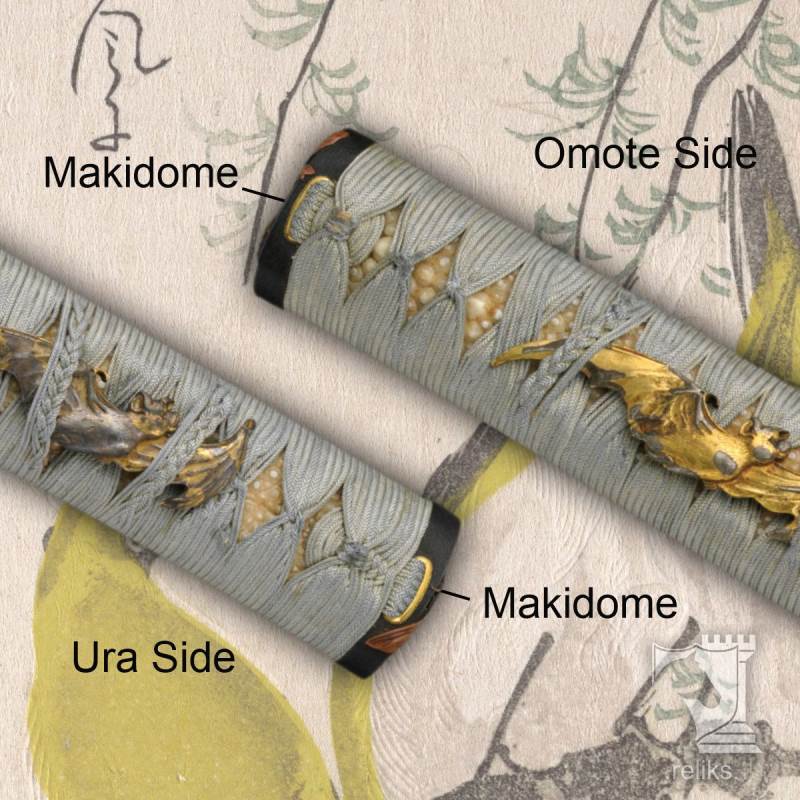
One Makidome, Two Sides: Omote and Ura*
One Makidome, Two Sides: Omote and Ura
One of the most common misunderstandings is that the makidome is only the visible knot on one side of the handle. In reality, the makidome should be understood as the full finishing termination of the wrap as a whole. One side may show the more obvious crossing or tuck, but both sides form part of the same final locked structure.
Collectors describe these sides as the omote and ura. On a standard katana mounting worn edge-up through the sash, the omote is the outward-facing side, while the ura is the side that rests toward the body. This is why experienced collectors avoid simply calling them the “front” and “back” of the handle.
On a mounted sword, readers will often find it easiest to orient themselves by looking at the overall koshirae. In standard katana-style mounting, the side of the saya where the kurigata is presented generally corresponds to the outward-facing presentation side, which helps make omote and ura easier to understand in practice.
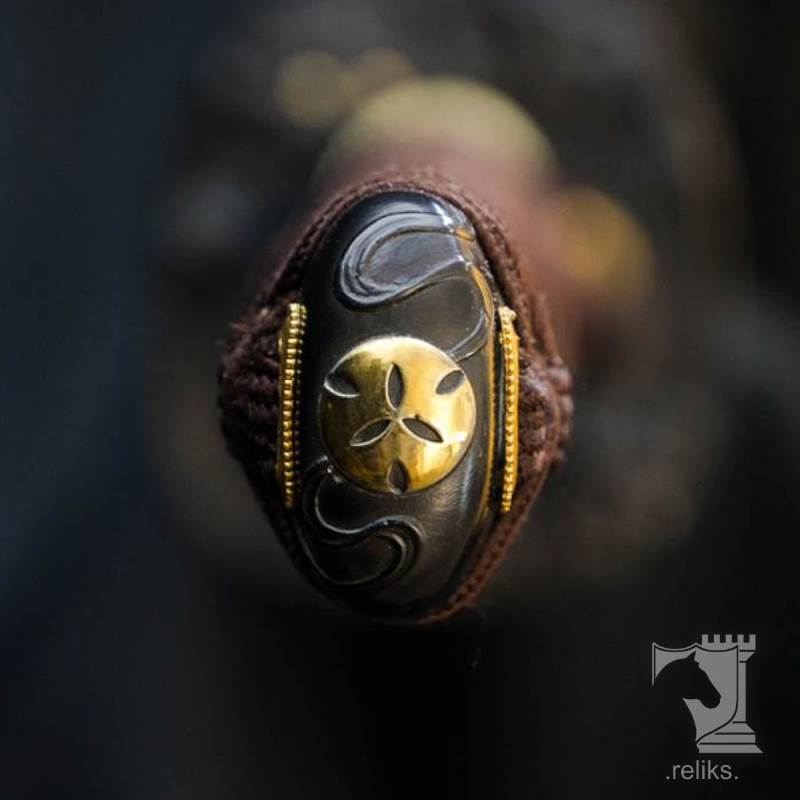
This pass-through is one of the most important details in a properly executed makidome.
The Role of the Kashira in the Final Wrap
The makidome is inseparable from the kashira, the pommel cap at the end of the tsuka. A proper finish does not simply stop at the kashira. Instead, the final passes of the ito work with it. On many traditional wraps, the ito passes cleanly through the openings in the kashira before being crossed and locked into place. These openings are part of the system, not an afterthought.
This is one reason the makidome is so revealing. A clean pass-through shows that the wrapper understood both the geometry of the wrap and the construction of the fitting. A poor finish may still resemble a knot, but if the transitions into and out of the kashira are clumsy, the result often looks heavier and less refined.
Even when viewed separately from the sword, the kashira itself tells part of the story. The openings in the kashira are there to receive the final passes of the wrap and help define how the makidome is formed.
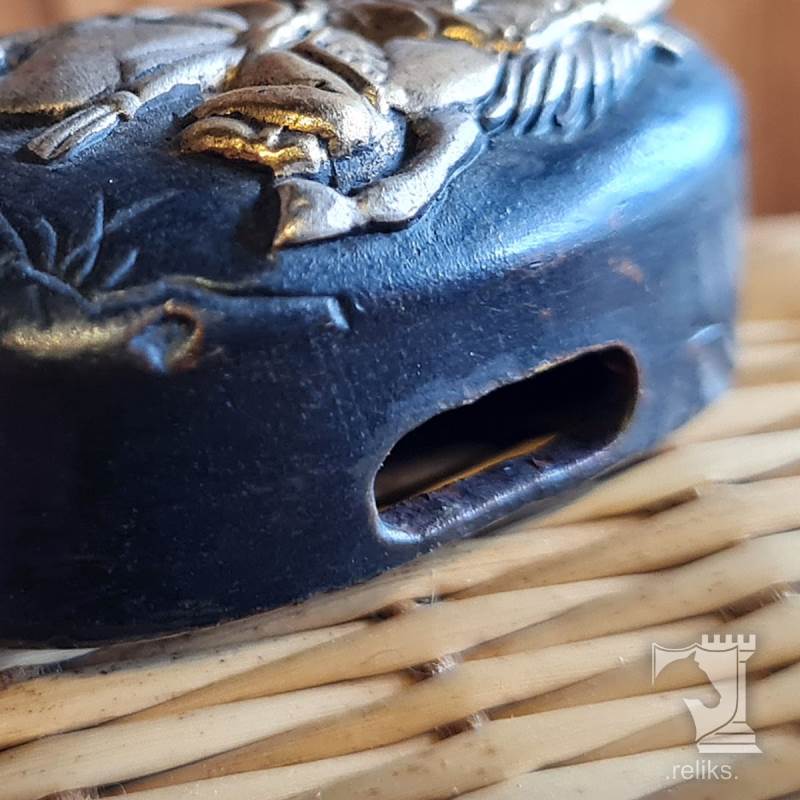
Unmounted Japanese sword kashira showing the ana openings used for tsuka wrap termination
What Collectors Should Look For
A strong makidome does not need to be flashy. In fact, the best examples often look effortless. The finish should sit naturally against the kashira, without excessive bulk or awkward bunching. The ito should appear controlled right to the end, with the final passes feeling intentional rather than improvised.
When studying a makidome, collectors should pay attention to whether the tension remains consistent as the wrap approaches the kashira, whether the ito enters and exits the kashira cleanly, and whether the finish sits low and natural rather than appearing bulky or forced. A well-executed makidome usually shows visual balance between the omote and ura sides, even if one side presents the more obvious crossing. These are not rigid rules for every sword, especially on antiques that may have seen wear, remounting, or later restoration, but they are excellent habits for learning how to separate a thoughtful wrap from a merely cosmetic one.
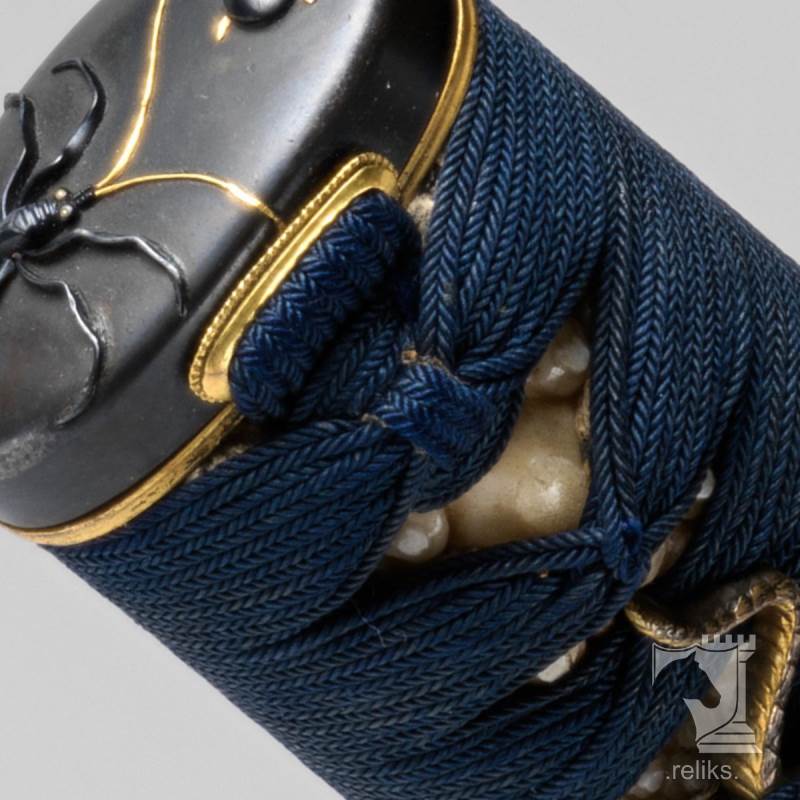
Detailed close-up of a traditional Japanese sword makidome showing the final crossing and wrap tension*
Makidome on Traditional and Production Swords
Many modern production swords include a visible end knot intended to echo traditional makidome, and some do a respectable job of it. Others, however, prioritise the appearance of a knot without fully reproducing the cleaner structure and tighter transitions found on more carefully wrapped handles. This does not automatically make a production sword “bad,” but it does mean that collectors should look beyond whether a knot is present and ask how well the finish actually works.
On a better example, the makidome tends to feel integrated with the kashira. On a more cosmetic example, the end may look larger, more abrupt, or less controlled. The difference is often subtle in casual photos, but once you learn to inspect the final inches of the tsuka, it becomes much easier to see.
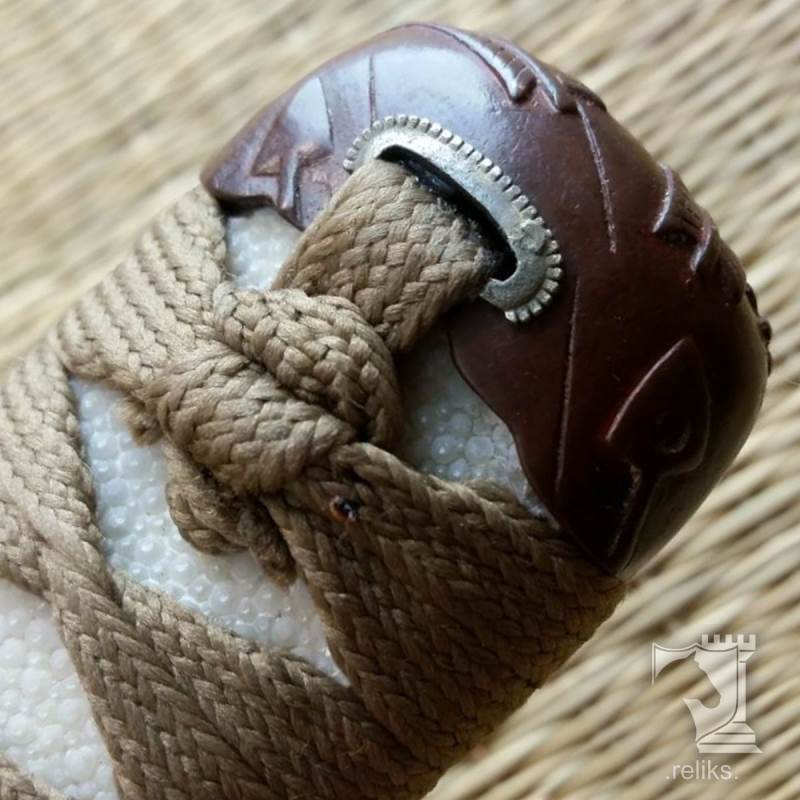
A makidome on a modern production sword. Many production pieces echo the traditional look, but collectors should look closely at bulk, tension, and how naturally the finish integrates with the kashira.
A Small Detail That Reveals a Great Deal
For casual buyers, the makidome may seem like a minor end knot at the pommel. For collectors, it is one of the most honest details on the entire handle. It shows how the wrap was completed, how the kashira was used, and whether the final inches of the tsuka were treated as a true structural finish or simply dressed to look correct.
Like many aspects of Japanese sword mounting, the makidome rewards close attention. It is a small detail, but once you learn to see it properly, it becomes one of the easiest ways to recognise thoughtful craftsmanship in a wrapped tsuka.
*Images marked with an asterisk are historical reference images sourced from public-use museum or public-domain collections, including The Metropolitan Museum of Art Open Access collection.