The Kashira - Parts of a Japanese Katana
The kashira
is the cap fitted to the end of the tsuka
, or handle, of a Japanese sword. It may look like a small detail at first glance, but the kashira plays an important role in both the construction
and appearance
of a traditional katana. It closes the end of the handle, helps secure the final tie-off of the tsuka-ito
wrapping, and often serves as one of the most artistic elements in a complete set of sword fittings.
On a simple sword, the kashira may be plain and purely functional. On a finer Japanese sword, it can become a miniature work of art, decorated with carved relief, richly coloured alloys, or intricate surface textures. For collectors, the kashira is one of the clearest places to judge the refinement of a sword's mountings and to appreciate how Japanese sword furniture blends practical design with high craftsmanship.
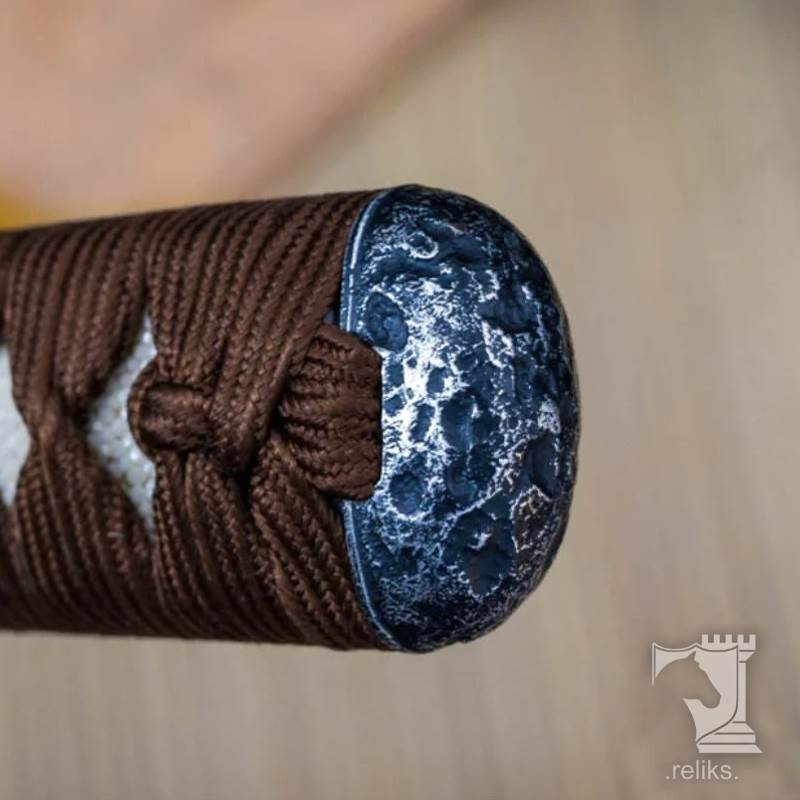
Ron Chen opted to not use a Shitodome on the Mukade Ni Katana Centipede inspired Katana.
What Is the Kashira on a Katana?
The kashira is the metal end cap mounted at the butt of the sword handle. It works together with the fuchi
, the collar at the front of the handle, to frame the wrapped grip. Together, these two fittings are known as the fuchi-kashira
set.
Although the kashira sits where many Western collectors expect to see a pommel, it should not be understood as the Japanese equivalent of a European pommel. A European pommel is often a structural and balancing component of the hilt. The kashira serves a different purpose. It finishes the handle, protects the end of the tsuka
, and provides the openings through which the handle wrap can be secured.
This distinction matters because it highlights one of the major differences between Japanese sword construction
and European sword construction
. The katana handle was built around a wooden core, ray skin, wrapping, and carefully fitted hardware rather than a heavy pommel meant to counter-balance the blade.
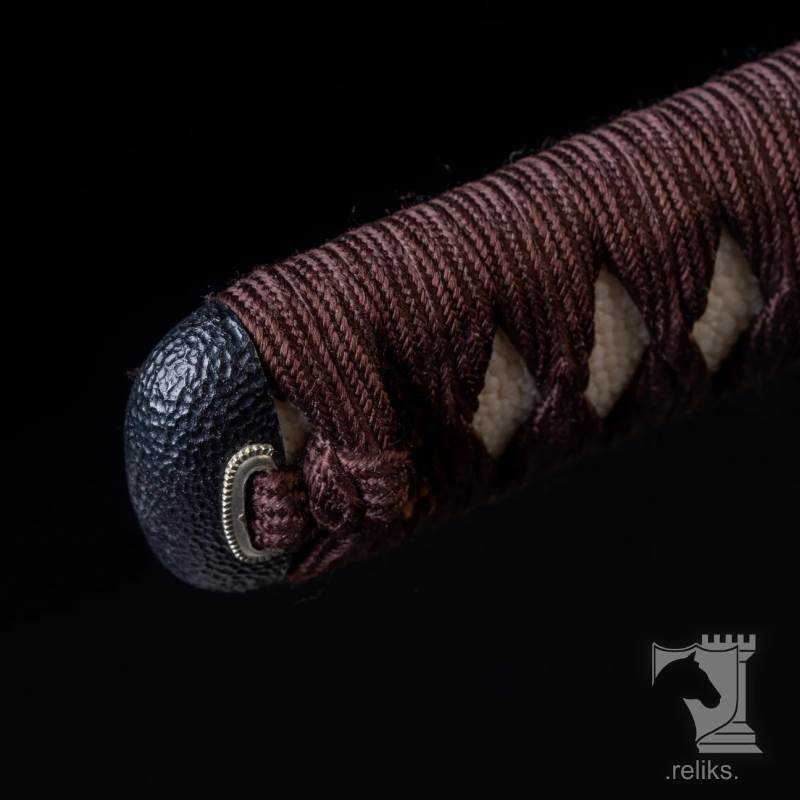
The Kashira from the Bugei Armourer's Katana uses a Shitodome.
What Does the Kashira Actually Do?
The kashira is small, but it performs several important jobs.
First, it closes and protects the end of the tsuka. This gives the handle a finished form and helps reinforce the end of the grip where the wrapping is tensioned.
Second, it anchors the final wrap of the tsuka-ito
. The cord passes through small openings on either side of the kashira so the wrap can be tied off securely. These side openings are part of the kashira itself, and on finer examples they may be fitted with small metal eyelets called shitodome
. These inserts help protect the cord from wear while adding a subtle decorative accent.
Third, the kashira completes the visual theme of the sword. On traditional mountings it is rarely treated as an afterthought. Instead, it often carries part of the same decorative theme seen on the fuchi, menuki, and sometimes the tsuba as well.
Kashira vs. Pommel
One of the most common misunderstandings is the idea that the kashira is simply a Japanese pommel. While they occupy a similar location on the sword, they are not the same thing.
A European pommel is often a major structural part of the sword hilt and can contribute significantly to the handling and balance of the weapon. The kashira is generally much lighter in concept. Its job is not primarily to counterweight the blade, but to finish the handle and support the mounting system of the tsuka.
For anyone studying parts of a Japanese katana
, this is an important detail. The kashira belongs to the language of koshirae
, the complete mounted furniture of the sword, where function and aesthetics are closely linked.
The Fuchi-Kashira Pair
The kashira is often made as part of a matching fuchi-kashira
set. The fuchi is the metal collar at the front of the tsuka near the tsuba, while the kashira forms the cap at the end. When made as a pair, the two fittings usually share the same motif, metal, and overall artistic style.
This pairing is one of the details collectors look for when judging quality. A strong fuchi-kashira set feels visually unified. The subject may flow naturally from one piece to the other, such as birds moving through grasses, blossoms spreading across both fittings, or a seasonal scene unfolding from front to back across the handle.
In many antique examples, the kashira is not merely decorative filler at the end of the grip. It is the second half of a complete artistic statement.
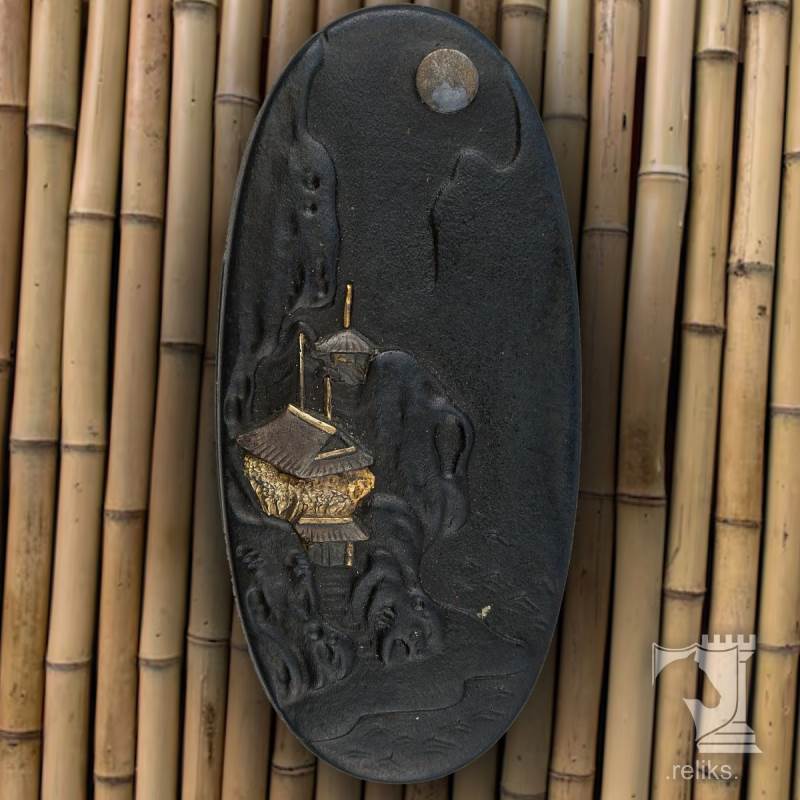
Nanako creates a finely textured dotted background that makes raised details stand out with remarkable clarity.*
Materials Used for Kashira
One of the reasons kashira are so fascinating is the wide range of metals and alloys used by Japanese fittings artists. Even on such a small piece, the choice of material can dramatically affect the look and character of the sword.
Shakudo
was one of the most prized materials used in sword fittings. This copper-based alloy was finished to a deep blue-black or purple-black patina, creating a rich dark ground that made gold and silver details stand out beautifully.
Shibuichi
, a copper and silver alloy, was also widely used. It was valued for its subtle grey tones and often chosen for understated, elegant work.
Copper
appears frequently both as a base metal and as part of relief decoration, while iron
kashira tend to carry a more restrained, martial appearance. On higher-end pieces, gold and silver were used for inlays, overlays, highlights, and fine details.
This combination of metals allowed Japanese craftsmen to create astonishing contrast on a fitting only a few centimetres across.
Nanako - The Textured Background
One of the most recognisable decorative finishes on high-quality kashira is nanako
. This surface is formed from countless tiny punched dots arranged with remarkable precision. When viewed in light, nanako creates a subtle shimmer that gives the fitting a jewel-like richness.
Nanako is usually used as a background texture rather than the main design. It helps raised motifs stand out clearly and gives the surface a refined, finished appearance. On shakudo, the effect can be especially striking.
For collectors, crisp and even nanako is one of the signs of careful workmanship. It may seem simple at first, but producing it evenly across a curved fitting required a high level of control and patience.
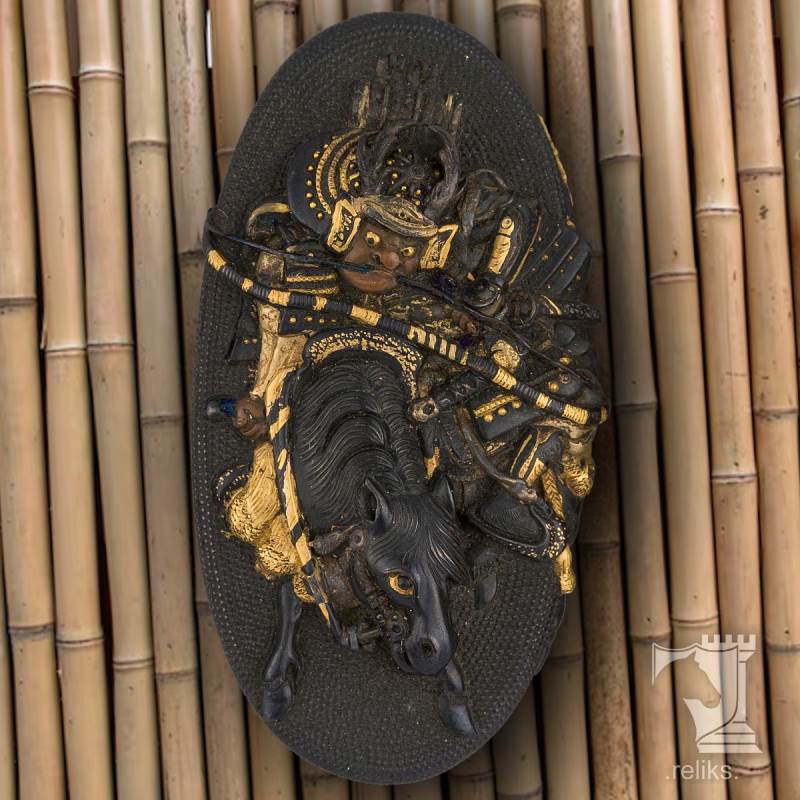
Relief-carved kashira transform a small sword fitting into a miniature sculpture rich with depth and symbolism.*
Relief Work - Miniature Sculpture in Metal
Many kashira are decorated in relief
, where the design is raised above the background. This technique turns a small sword fitting into a miniature sculpture. A bird, flower, dragon, wave, or figure can be made to project from the surface with surprising depth.
Some relief work is shallow and elegant, while other pieces are deeply modelled for dramatic effect. The best examples create a strong contrast between foreground and background, allowing the design to remain readable even at a very small scale.
This is one of the reasons collectors are drawn to fine Japanese sword fittings. A well-made kashira can reward close study in the same way a larger sculptural object does, even though it was created to sit at the end of a sword handle.
Iroye - Colour Through Metal
Another remarkable decorative approach found on kashira is iroye
, often translated as a kind of coloured picture effect in metal. Rather than using paint, the artist combines different alloys and patinas to create visual contrast. Gold, silver, shakudo, shibuichi, and copper may all be used together to produce a richly layered design.
The result can look almost painterly, but everything is accomplished through metalworking. On a single kashira, a bird might be rendered in copper with silver highlights, set against a shakudo ground with gold flowers or foliage. This gives the fitting depth, warmth, and a surprising sense of life.
When collectors describe Edo period fittings as wearable art, iroye is one of the techniques they are often responding to.
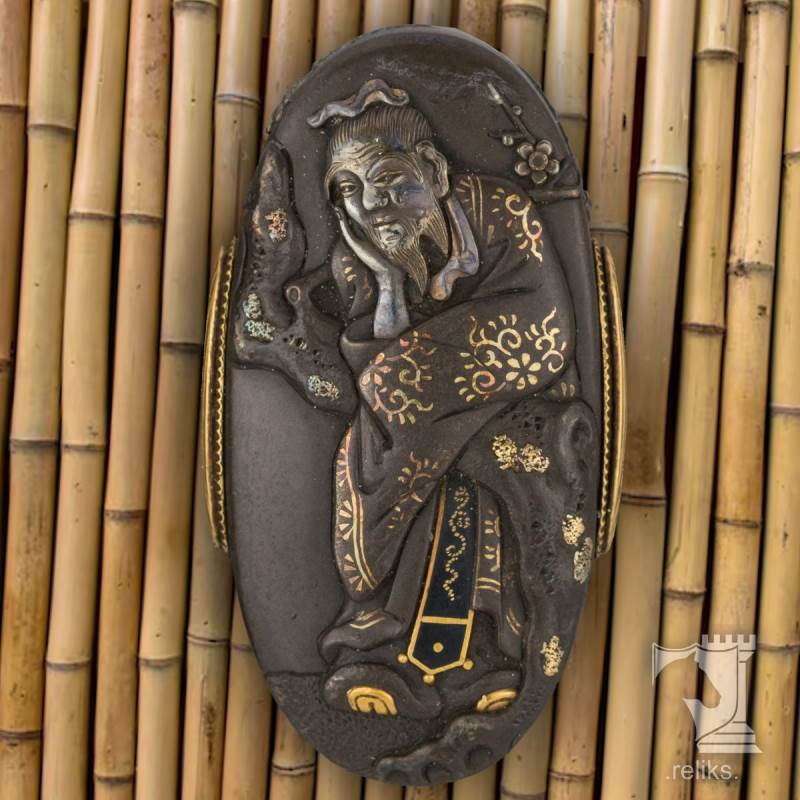
Iroye uses multiple alloys and patinas to create a “coloured picture” effect in metal without the use of paint.*
Popular Themes Found on Kashira
The subjects used on kashira are as varied as those found elsewhere in Japanese sword furniture, but certain themes appear again and again.
Nature motifs
are especially common. Chrysanthemums, cherry blossoms, bamboo, grasses, waves, and flowing water all appear frequently. These subjects were not chosen only for beauty. They could also carry seasonal, poetic, or symbolic meaning.
Birds and animals
were also popular. Sparrows, swallows, cranes, shorebirds, and mythical creatures all appear on kashira. These could suggest longevity, vigilance, good fortune, noble character, or seasonal change.
Mythological and religious figures
also appear on finer fittings. Buddhist guardians, gods of fortune, and legendary characters gave the kashira a deeper symbolic identity and connected the sword to larger themes of protection, status, or cultural taste.
Why So Many Kashira Are Edo Period Works of Art
Many of the finest kashira seen in museums and collections today date to the Edo period (1603-1868)
. That long era of relative peace changed the role of sword mountings in important ways. Swords remained symbols of rank, identity, and culture, but fittings were no longer shaped only by battlefield needs.
During this time, Japanese metalworkers elevated sword fittings into an art form. The kashira became a place where tiny scenes, delicate textures, and symbolic motifs could be explored with extraordinary skill. In many cases, late Edo fittings feel closer to jewellery than to simple hardware.
That does not make them any less important to the sword. It means that the sword, especially in formal or high-status mountings, became a place where function and art were expected to coexist.
What to Look For as a Collector
If you are comparing kashira on antique swords or reproductions, there are several details worth noticing.
Look first at the quality of the surface. A good kashira should have clean shaping and clear detail. If the piece uses nanako, the texture should appear deliberate and even rather than muddy or inconsistent.
Study the relief. Better work has stronger depth, cleaner edges, and more separation between the subject and the ground. Also look closely at the side holes where the tsuka-ito passes through. If the piece has neatly fitted shitodome
, that is often a sign of a more refined mounting.
Finally, consider how the kashira works with the rest of the tsuka. A quality kashira rarely feels isolated. It should belong to the visual language of the sword and connect naturally with the fuchi, menuki, and the overall theme of the koshirae.
Why the Kashira Matters
To someone new to Japanese swords, the kashira may seem like a small cap at the end of the handle. To a collector, it can reveal a great deal about the sword. It shows how the tsuka was finished, how carefully the handle was wrapped, whether the fittings were made as a coordinated set, and whether the sword leans toward simple practicality or decorative refinement.
The kashira is one of those parts that rewards close attention. It is easy to overlook in a quick glance, but once you begin studying Japanese sword furniture, it becomes one of the most interesting details on the entire mounting.
Final Thoughts
The kashira
may be one of the smallest visible parts of a Japanese sword, but it carries surprising importance. It finishes the end of the tsuka, supports the final tie-off of the handle wrapping, and often completes the artistic statement of the sword's mountings. Whether plain and practical or richly decorated with nanako, iroye, and relief carving, the kashira reflects the uniquely Japanese union of utility and artistry.
For collectors, learning to recognise a quality kashira is more than learning the name of one part. It is learning how to read the craftsmanship, taste, and identity of the sword as a whole.
Photo's of Kashira found on katana we offer.
 Cold Steel’s Dragonfly Series reimagines these dimensions for the modern era, offering thicker, wider, and heavier blades paired with fittings inspired by the courage and victory symbolized by the dragonfly in Japanese culture.
See more of the Dragonfly Wakizashi w/Katana Handle Simple and elegant kashira of the Winter Sun Samurai Sword.
See more of the Winter Sun Samurai Sword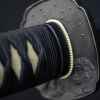 The blackened tsuba, fuchi, tsuka-ito and fuchi-kashira contrast the real white same (rayskin) handle and the black textured lacquered saya.
See more of the Winter Sun Samurai Sword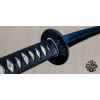 Continuing the tradition XL Series of katana blade geometry, our new cutter features the billowing clouds and raimie (thunderclap) theme from fuchie to kashira. With a double pegged and fully removeable tsuka (handle) with synthetic components around the wood core.
See more of the Raimie XL Katana The dragonfly kashira, along with the fuchi (hilt collar), reinforces the tsuka and provides a point for the handle wrapping (tsukaito) to tie off.
See more of the Hanwei Dragonfly Katana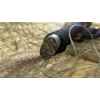 The Domoe symbol adorns the kashira of the Crane Katana.
See more of the Tomoe and Crane Katana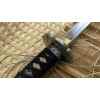 Tomoe symbols, representing strength and spiritual motion adorn the fuchi and kashira.
See more of the Tomoe and Crane Katana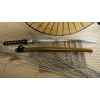 Tomoe symbols, representing strength and spiritual motion adorn the fuchi and kashira, while elegant crane motifs, symbolizing longevity and grace, decorate the tsuba and included kogatana (small utility knife).
See more of the Tomoe and Crane Katana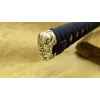 Flowing water kashira on the Water Dragon Starter Katana.
See more of the Water Dragon Katana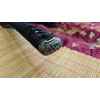 the katana fuchi
See more of the Ryujin Katana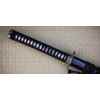 The silver Ryujin themed tsuba, fuchi and kashira are contrasted by the lacquered black saya, sageo and tsuka-ito over white same.
See more of the Ryujin Katana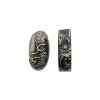 Ryujin theme throughout this limited edition katana.
See more of the Ryujin Katana*Images marked with an asterisk are historical reference images sourced from public-use museum or public-domain collections, including The Metropolitan Museum of Art Open Access collection.