The Grip - Parts of the European Sword
The swords grip can be made of many different types of material but leaning towards materials that have better gripping qualities. Authentic swords commonly used carved wood grips, horn, ivory or even different varieties of bone for the handle. Wooden handles would often be wrapped in a gripping material like a leather, fish, manta ray or shark skin. The type of material used would usually be influenced by the culture and resources that were readily available. Other wrappings included twine, rope and twisted metal wire. The grip as any of the other pieces of a sword could be very elaborate and ornate. Swords made for royalty may have had expert leather engravings, embossing or lavish decorative ornaments made of gold. The possibilities are almost limitless and you will find examples of many types of grips on the pieces throughout our site as well as museum pieces found throughout the world.
Examples of Various Sword Grips
These are some photo's of several different sword grips on the European swords that we offer.
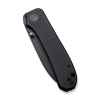 Black G10 handle scales provide secure grip without excess texture, while the nested liner lock keeps the profile slim and pocket friendly.
See more of the Big Banter Thumb Stud Knife Black G10 Handle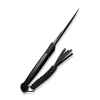 A black G10 handle offers a secure, comfortable grip, supported by stainless steel pins for long term durability.
See more of the Tamashii Fixed Blade Black Knife G10 Handle 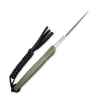 The OD green G10 handle provides a secure grip in varied conditions, complemented by stainless steel pins for long term durability.
See more of the Tamashii Fixed Blade Knife OD Green G10 Handle 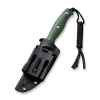 A contoured micarta handle ensures a secure grip even in changing conditions, and the black Kydex sheath with T-Clip allows for versatile, secure carry options.
See more of the Stormridge Fixed Blade Knife Green Micarta Handle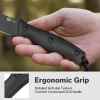 The contoured G10 handle provides a secure grip in dry or wet conditions, and the included paracord lanyard adds extra control when needed.
See more of the Stormridge Fixed Blade Knife Black G10 Handle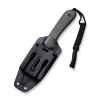 The flat micarta handle provides a secure, non slip grip even with wet or gloved hands, and the included black Kydex sheath with Bob Terzuola designed T-Clip allows for flexible belt or pack mounting.
See more of the Fixed Blade Elementum Tactical Knife Dark Green Micarta Handle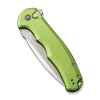 The lime green aluminum handle and matching back spacer keep the knife lightweight while offering a solid, confident grip.
See more of the Button Lock Praxis Flipper Knife Lime Green Aluminum Handle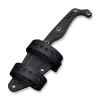 he black G10 handle scales provide a secure, low profile grip without adding bulk.
See more of the SOKN Fixed Blade Knife G10 Handle 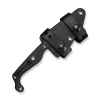 Its balanced proportions, lightweight build, and secure grip make it an ideal choice for utility tasks, outdoor use, or as a reliable backup blade.
See more of the SOKN Fixed Blade Knife Black G10 Handle 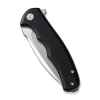 Black G10 handle scales provide a secure grip without excess texture, paired with grey finished stainless steel liners and hardware for subtle contrast.
See more of the Mini Praxis Flipper Knife Black G10 Handle 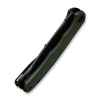 The green G10 handle scales offer a secure, comfortable grip, paired with black finished stainless steel liners and hardware for a cohesive look.
See more of the Mini Praxis Flipper Knife OD Green G10 Handle 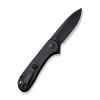 The G10 handle scales provide a secure grip with a comfortable thickness, paired with black finished stainless steel liners and hardware for a cohesive appearance.
See more of the Button Lock Elementum II Flipper Knife Black G10 Handle