Steel vs Silver: The Three Defining Witcher Swords Explained
Few fantasy weapons are as instantly recognizable as the swords carried by Geralt of Rivia. Long before players learn the politics of Temeria or the horrors lurking in Velen’s swamps, they learn one essential truth about the Witcher’s trade: Geralt does not carry just one blade
. He carries steel for the world of men, and silver for the things that should not exist at all. In The Witcher 3: Wild Hunt
, that iconic pairing reaches its most memorable form through Geralt’s Steel Sword
, Geralt’s Silver Sword
, and the legendary Aerondight
.
For many fans, the question begins simply: why does Geralt have two swords?
But the deeper answer is what makes the Witcher universe so compelling. The difference between steel and silver is not just a gameplay mechanic. It is a reflection of the Witcher’s profession, the folklore that shaped the setting, and the grim reality that in Geralt’s world, monsters are not always the creatures with claws. Sometimes the silver sword is the more famous blade, but the steel sword is the one that reminds us the Continent is just as dangerous when the enemy is human. And then there is Aerondight, the blade that stands apart from both a weapon of legend, virtue, and one of the most beloved quest rewards in modern RPG history.
This is what makes these three swords such a powerful trio for collectors and fans of The Witcher 3
. Together, they do more than represent three beautiful weapons. They define the entire combat identity of the Witcher: the practical blade, the specialist blade, and the legendary blade
.
Why Does Geralt Carry Two Swords?
The short answer is simple: steel is for humans and ordinary creatures, silver is for monsters touched by magic, curses, or the unnatural
. But like many things in the Witcher universe, the truth is more nuanced than the shorthand.
In broad terms, a Witcher’s steel sword
is used against men, soldiers, bandits, wild animals, and many threats that are dangerous but fundamentally natural. A silver sword
is reserved for creatures whose nature is tied to the supernatural beings born of curses, magical corruption, old folklore, or the lingering horrors of the Conjunction of the Spheres. That distinction is one of the core ideas behind the Witcher fantasy. Geralt is not simply a swordsman. He is a professional hunter trained to understand what kind of danger he is facing, and what tool is needed to deal with it.
That is why the steel-versus-silver distinction resonates so strongly with fans. It is not just a “weapon swap” mechanic. It tells you what a Witcher is. He studies the creature, prepares the oils, chooses the right blade, and goes to work. The sword on his back is never just decoration.
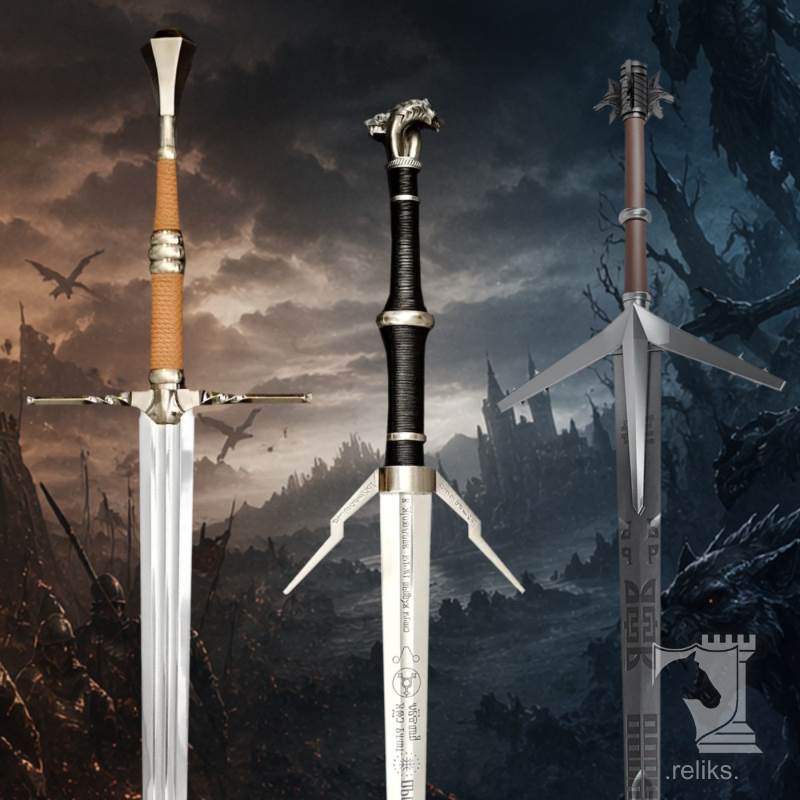
Few fantasy weapons are as instantly recognizable as the swords carried by Geralt of Rivia
Steel vs Silver in Witcher Lore: More Than a Game Mechanic
One of the best things about the Witcher universe is that it treats monster hunting like a profession instead of a fairy tale. That means the difference between steel and silver is not presented as a simplistic “silver kills everything evil” rule. In the books, the games, and the wider fan understanding of the setting, silver is a specialist weapon
, not a universal solution.
Silver has deep roots in European folklore. It is associated with purity, the moon, sacred protection, and the power to harm creatures that exist outside the natural order. Werewolves, curses, spectres, and other supernatural beings are all part of that tradition. The Witcher draws heavily from that heritage, but it adds its own professional logic. A Witcher does not carry silver because it is “better” than steel. He carries it because certain enemies are resistant to ordinary methods, and silver is one of the few materials that can properly wound them.
That distinction matters because many fans and plenty of casual observers misunderstand the silver sword as Geralt’s “main” weapon. In reality, it is better understood as a specialized instrument
. The silver sword is the one that symbolizes the Witcher’s role as a monster slayer, but the steel sword often sees just as much, if not more, use in a world dominated by warlords, deserters, mercenaries, and men who are often more cruel than the beasts in the forest.
That tension is one of the great themes of the series. The silver sword is for the monsters everyone fears. The steel sword is for the monsters who wear crowns, uniforms, and smiles.
Geralt’s Steel Sword: The Blade for the World of Men
If the silver sword is the blade most associated with the Witcher myth, the steel sword
is the one that grounds Geralt in reality. This is the sword he uses against soldiers, brigands, assassins, raiders, and the countless human enemies that make the Continent such a brutal place. It is also used against wolves, dogs, and many other living threats that are dangerous but not supernatural in nature.
That makes Geralt’s steel sword incredibly important from both a lore and collector perspective. It represents the side of the Witcher that is often overshadowed by monsters and magic: the fact that Geralt lives in a world of political violence, broken kingdoms, and deeply human cruelty. In The Witcher 3: Wild Hunt
, players spend a tremendous amount of time fighting human enemies. Nilfgaardian soldiers, Redanian forces, witch hunters, pirates, and common bandits all remind you that steel is not secondary. It is essential.
Visually, the steel sword also tends to feel like the more practical and martial of the pair. It is the weapon of a professional swordsman moving through taverns, roadsides, battlefields, and ruins. It speaks to balance, durability, and the daily work of survival. For collectors, that often gives the steel sword a unique appeal. It feels like the sword Geralt would rely on when the job turns ugly before the monster ever appears.
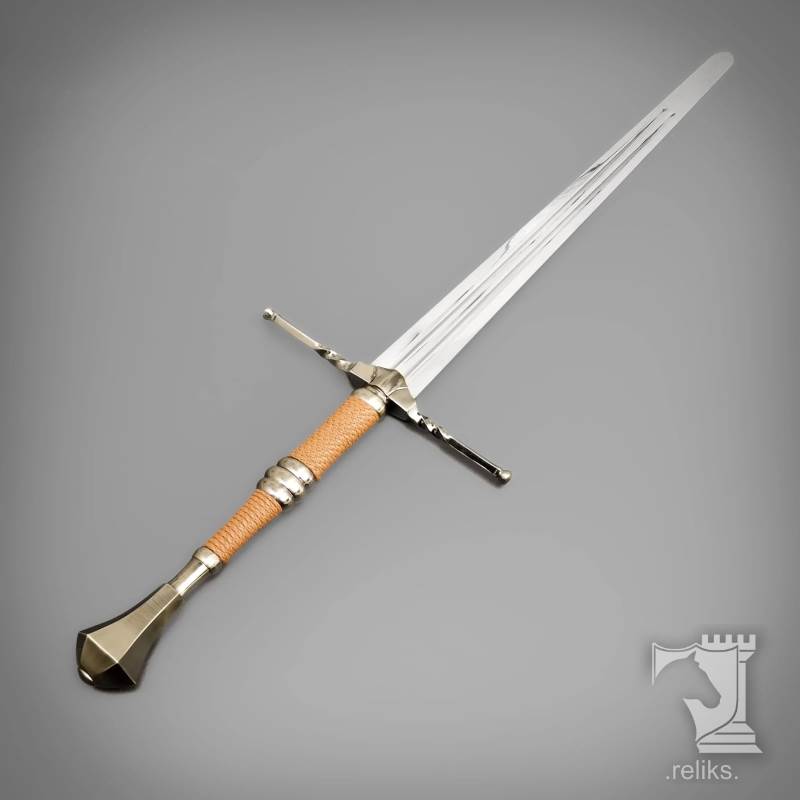
Witcher’s steel sword is used against men, soldiers, bandits, wild animals, and many threats that are dangerous but fundamentally natural
There is also a thematic reason the steel sword matters so much. One of the Witcher franchise’s most enduring ideas is that human beings are often more dangerous than monsters
. Geralt may be hired to kill drowners, wraiths, and leshens, but time and again it is greed, fanaticism, prejudice, and ambition that leave the deepest scars on the world around him. The steel sword is the blade that reminds us of that truth. It is not glamorous. It is necessary.
Geralt’s Silver Sword: The Specialist Blade That Defines the Witcher
If one sword captures the imagination of new fans, it is usually the silver sword
. It is the blade that most clearly separates a Witcher from an ordinary mercenary or wandering knight. Anyone can carry steel. The silver sword tells you that Geralt is preparing to fight something unnatural.
In Witcher lore, the silver sword is used against creatures whose essence is tied to curses, dark magic, mutations, or the strange and terrible legacy of worlds colliding. Spectres, cursed beings, necrophages, certain magical beasts, and many of the franchise’s most memorable monsters fall into this category. In gameplay, this becomes a clean and readable system: players learn which enemies call for silver, and the sword becomes a symbol of preparation and expertise. But behind that system is a deeper idea. The silver sword is not a stronger sword. It is the right sword.
That distinction is one of the most important things to understand when talking about steel vs silver in The Witcher 3
. Silver is not superior in every circumstance. It is not Geralt’s “best” sword simply because it is more exotic. It is the blade designed for a specific kind of work. Against the wrong target, it is simply the wrong tool. That professional, almost tradesman-like logic is part of what makes the Witcher world feel so believable.
For collectors, Geralt’s silver sword is often the most iconic of the standard pair because it embodies the core fantasy of the series. This is the weapon people picture when they think of a Witcher stepping into a moonlit marsh to hunt a cursed creature. It carries the weight of folklore, superstition, and ritual. It is the sword of contracts, signs, potions, oils, and hard-earned knowledge. It is the blade that says the hunt has truly begun.
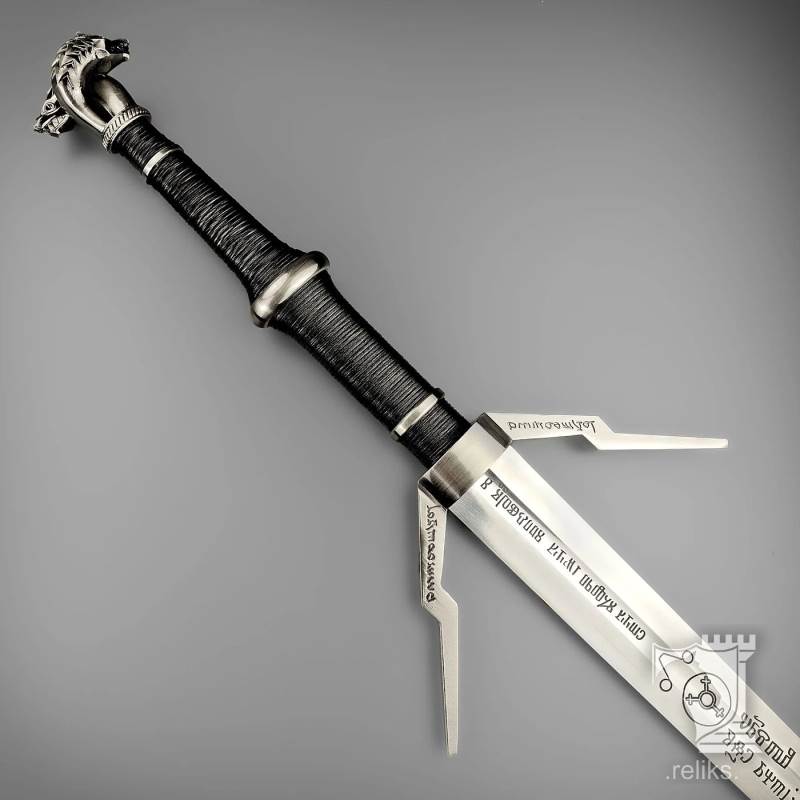
Silver swords are reserved for creatures whose nature is tied to the supernatural beings born of curses, magical corruption, old folklore, or the lingering horrors of the Conjunction of the Spheres
There is another reason the silver sword looms so large in the imagination of fans: it is a visual shorthand for the entire profession. In a crowded fantasy landscape full of heroes with “magic swords,” Geralt’s silver sword stands out because it is not simply enchanted or legendary. It is functional, purposeful, and rooted in the old logic of monster folklore. It tells a story before it ever leaves the scabbard.
Steel vs Silver in Gameplay: What the Games Simplify and Why It Works
The Witcher 3
does an excellent job of translating a nuanced lore concept into something players can understand quickly in combat. In gameplay terms, the distinction between steel and silver is made clear for readability and rhythm. Players know when they are fighting men, beasts, or ordinary threats, and they know when they are facing the supernatural. That clarity is important in a fast-moving action RPG, and it helps reinforce the fantasy that Geralt is always choosing the correct tool for the job.
But the games also naturally simplify the world. The actual lore is a little messier, and that is a good thing. The Witcher setting has always thrived on ambiguity. Some creatures blur the line between natural and unnatural. Some threats are monstrous in behaviour but not in biology. Some beings are cursed, transformed, or shaped by magic in ways that make neat categories imperfect. The game system sharpens those edges because it has to, but the underlying lore remains richer than a simple menu prompt.
For fans, that is part of the appeal. The steel-versus-silver distinction works on two levels at once. In gameplay, it is intuitive and satisfying. In lore, it opens the door to deeper discussions about what makes a monster, what silver really means in the Witcher world, and why Geralt’s profession is built around knowledge rather than brute force. That is exactly why the question “steel or silver?” remains one of the most enduring Witcher discussions among players and collectors alike.
Aerondight: The Legendary Sword That Stands Above the Standard Pair
Then there is Aerondight
, a sword that occupies a different place in the hearts of Witcher fans. While Geralt’s steel and silver swords define the everyday identity of the profession, Aerondight represents something rarer: the moment when the Witcher becomes a figure of legend
.
In The Witcher 3: Blood and Wine
, Aerondight is not just another weapon upgrade. It is one of the most memorable and meaningful swords in the game because it is wrapped in myth, chivalry, and the unique atmosphere of Toussaint. Where much of the Witcher world is cynical, muddy, and cruel, Toussaint introduces a more romantic and knightly layer of fantasy. Aerondight fits that tone perfectly. It feels less like a contractor’s tool and more like a relic from a higher tradition, something noble, symbolic, and almost Arthurian in spirit.
That is a major reason Aerondight has become such a fan-favourite. It is not merely strong. It is meaningful. The sword is tied to ideals, virtue, and the sense that Geralt is being recognized for something greater than survival. In a franchise that so often strips away illusions, Aerondight is one of the rare moments where the world allows Geralt to step into the role of a true legendary hero without irony swallowing the moment whole.
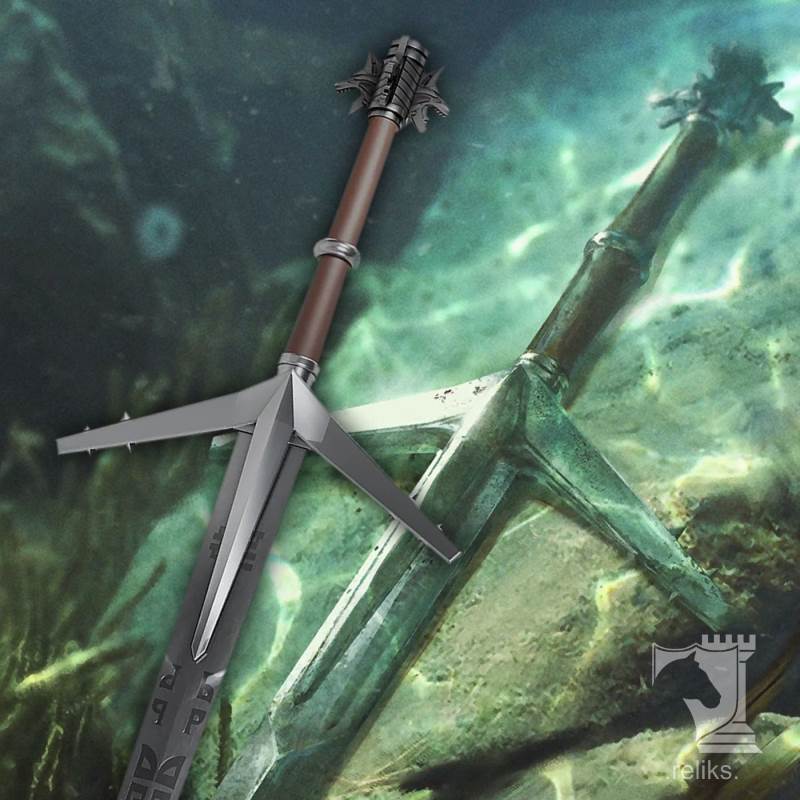
Aerondight is not just another weapon upgrade. It is one of the most memorable and meaningful swords in the game because it is wrapped in myth, chivalry, and the unique atmosphere of Toussaint
For collectors, Aerondight is arguably the single most coveted named sword in The Witcher 3
. It has the recognition of a top-tier quest reward, the emotional resonance of the Blood and Wine
expansion, and a visual identity that feels immediately special. If Geralt’s steel and silver swords represent the profession, Aerondight represents the myth. That is why it completes the trio so perfectly. Together, the three swords tell the full story: the work, the hunt, and the legend
.
Which Sword Is More Important: Steel or Silver?
This is where many fans land, and the answer depends on what you mean by “important.” If you are asking which sword best defines the fantasy of being a Witcher, the silver sword probably wins. It is the blade most tied to the monster-hunting profession, the old folklore roots of the series, and the imagery that instantly separates Geralt from other fantasy heroes.
But if you are asking which sword matters most to understanding Geralt as a character, the answer becomes less obvious. The steel sword is the blade that reminds us Geralt’s world is not divided cleanly between innocent people and evil beasts. He spends as much time navigating war, cruelty, prejudice, and greed as he does stalking cursed creatures. The steel sword is the blade of roads, contracts, politics, and human violence. It is the sword that proves the Witcher universe is not just monster fantasy it is moral fantasy.
That is why the best answer is this: neither sword is complete without the other
. The steel sword and silver sword are a matched pair because they represent the two halves of Geralt’s world. One fights what nature and mankind have made. The other fights what magic, curses, and ancient horrors have unleashed. Remove either one, and you lose part of what makes the Witcher so distinct.
For Collectors: Why These Are the Three Essential Witcher 3 Swords
For fans building a Witcher display, these three swords are more than just popular replicas. They are the most complete expression of The Witcher 3: Wild Hunt
in blade form.
Geralt’s Steel Sword
is the practical side of the Witcher’s trade, the sword of roads, soldiers, brigands, and the brutal politics of the Continent. Geralt’s Silver Sword
is the specialist weapon that defines the profession itself, the blade of contracts, curses, and monsters. Aerondight
is the legendary outlier, the sword that transforms the Witcher from a professional hunter into something closer to a mythic hero.
That is why this trio works so well together. They are not redundant. They each occupy a different role in the world and in the imagination of fans. One is practical. One is iconic. One is legendary.
For longtime players, they represent the complete emotional arc of The Witcher 3
: the harsh realities of the path, the specialised craft of the hunt, and the rare moments when Geralt earns something greater than coin. For collectors, that makes them an ideal centrepiece for any Witcher display.
The Last Word on Steel vs Silver
The enduring appeal of the Witcher’s swords lies in the fact that they are never just props. Steel and silver are not there to look cool, though they certainly do. They exist because the Witcher world takes its monsters seriously. Geralt’s blades are tools shaped by folklore, experience, and necessity. One belongs to the harsh, familiar violence of mankind. The other belongs to the ancient and unnatural terrors that lurk beyond the firelight.
And then Aerondight stands beyond them both, reminding us that sometimes, even in a world as cynical as the Continent, there is still room for legend.
For fans of The Witcher 3
, that is what makes these three swords so compelling. They are not simply famous weapons from a beloved game. They are the three blades that best capture the entire Witcher fantasy: steel for survival, silver for the hunt, and Aerondight for glory
.