If you have been shopping for a quality pocket knife recently, you have probably noticed more manufacturers offering blades made from Nitro-V steel. Once found mainly on custom knives and smaller production runs, Nitro-V now appears on everything from affordable everyday carry folders to premium outdoor knives.
Nitro-V has earned a reputation as one of the most balanced blade steels available. It is not the hardest steel on the market, and it does not claim the longest possible edge retention. Instead, it does something many knife users appreciate even more: it performs well in nearly every category that matters.
A good pocket knife should stay sharp through everyday tasks, resist rust after getting caught in the rain and sharpen without becoming a weekend-long project. Nitro-V delivers on all three, which is why it has become popular with knife manufacturers, collectors and everyday users.
What Is Nitro-V Steel?
Nitro-V is a modern stainless cutlery steel developed specifically for knife blades. It is closely related to the respected AEB-L family of steels, but its chemistry includes added nitrogen and a small amount of vanadium. These additions help improve corrosion resistance, edge stability and overall performance.
Rather than chasing extreme hardness or impressive laboratory numbers, Nitro-V was designed to provide a practical balance of edge retention, toughness, corrosion resistance and ease of sharpening. That balance is exactly what makes it such an attractive choice for an everyday carry knife.
Most pocket knives are not used to cut miles of cardboard or survive extreme torture tests. They are used to open packages, slice rope, prepare food at camp and handle dozens of small jobs throughout the day. Nitro-V is particularly well suited to these real-world tasks.
Why Knife Enthusiasts Like Nitro-V
Plenty of premium steels can outperform Nitro-V in one specific category, but fewer offer such a useful combination of qualities. Nitro-V feels less like a specialized steel and more like a dependable tool steel that is easy to live with.
-
Excellent corrosion resistance:
Nitro-V handles humidity, rain, perspiration and normal outdoor use with very little maintenance.
-
A tough and stable edge:
It holds a useful edge while resisting the small chips that can occur with some harder and more brittle steels.
-
Easy sharpening:
Nitro-V responds well to common sharpening systems and can usually be restored without specialized equipment.
-
Strong overall value:
It provides premium everyday performance without always carrying the price of a high-end powdered steel.
These qualities make Nitro-V especially appealing to people who want to carry and use their knives rather than constantly worry about protecting or maintaining them.
What Makes Nitro-V Different?
One of the main reasons Nitro-V performs so well is its fine grain structure. Without getting overly technical, the steel forms relatively small carbides compared with many highly wear-resistant steels.
A fine grain structure allows the blade to take a very keen edge and makes that edge easier to sharpen. It also contributes to toughness, helping the blade resist chipping during normal use.
Nitrogen also plays an important role. Along with chromium, it helps improve corrosion resistance while supporting hardness and edge stability. The result is a stainless steel that performs consistently and requires relatively little maintenance.
Most manufacturers heat treat Nitro-V to approximately 59–61 HRC
. This range provides a useful compromise between edge retention and toughness. The blade is hard enough to stay sharp through regular use without becoming unnecessarily brittle or difficult to maintain.
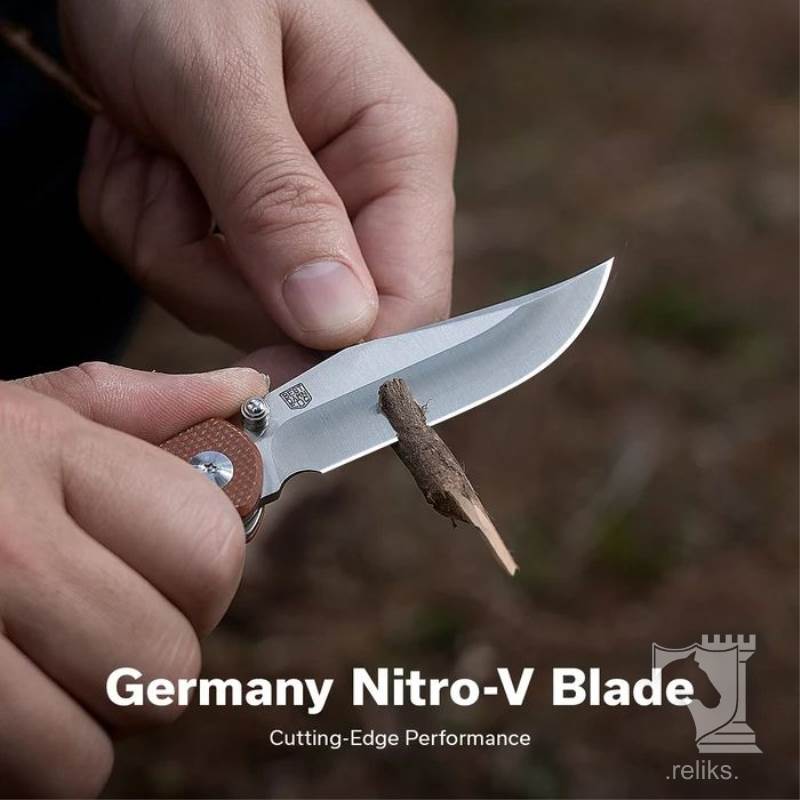
A good pocket knife should stay sharp through everyday tasks
Is Nitro-V Steel Good for Pocket Knives?
Nitro-V is an excellent steel for pocket knives, and this is arguably where it performs best.
An everyday carry knife may be asked to cut cardboard in the morning, slice fruit at lunch and trim cord later in the day. A practical pocket knife steel needs to perform a wide variety of tasks without demanding constant attention.
Nitro-V fits this role extremely well. It slices cleanly, resists corrosion, handles regular use and sharpens without excessive effort. These characteristics make it suitable for beginners who want a forgiving steel as well as experienced knife owners who appreciate easy maintenance.
Some steels may hold an edge longer under heavy cutting, but they can also be more difficult to sharpen. Many knife owners would rather carry a blade that can be touched up in a few minutes than one that requires specialized stones and considerable time once it finally becomes dull.
How Well Does Nitro-V Hold an Edge?
Nitro-V offers very good edge retention for ordinary pocket knife use. It is capable of handling packaging, rope, plastic, food preparation and light outdoor work before needing attention.
It is not intended to compete directly with highly wear-resistant steels such as CPM S90V or Maxamet. Those steels can hold an edge longer when cutting abrasive materials, but they are usually more expensive and much more demanding to sharpen.
Nitro-V takes a more practical approach. Its edge retention is good enough for regular use, while its fine structure allows the blade to be brought back to sharpness quickly. For many people, this balance is more useful than maximum wear resistance.
Is Nitro-V Tough?
Toughness is one of Nitro-V's strongest qualities. Its fine grain structure and moderate carbide content allow the cutting edge to flex and absorb stress better than many harder steels with large volumes of wear-resistant carbides.
This does not mean a Nitro-V pocket knife should be used as a pry bar or screwdriver. However, during normal cutting it is less likely to suffer small chips than some steels that prioritize hardness and edge retention above everything else.
That toughness makes Nitro-V a strong option for work knives, camping folders and EDC knives that may occasionally face harder use.
Does Nitro-V Steel Rust?
Nitro-V is a true stainless steel and offers excellent resistance to rust and staining. Its chromium content, combined with added nitrogen, makes it well suited to humid environments and outdoor carry.
Under normal use, corrosion should rarely be a concern. A Nitro-V blade can handle rain, perspiration and occasional food preparation without requiring constant oiling.
No knife steel is completely rust-proof, however. Saltwater, acidic residue and prolonged storage while wet can eventually affect almost any blade. Wiping the knife clean and dry after use is usually all the maintenance Nitro-V needs.
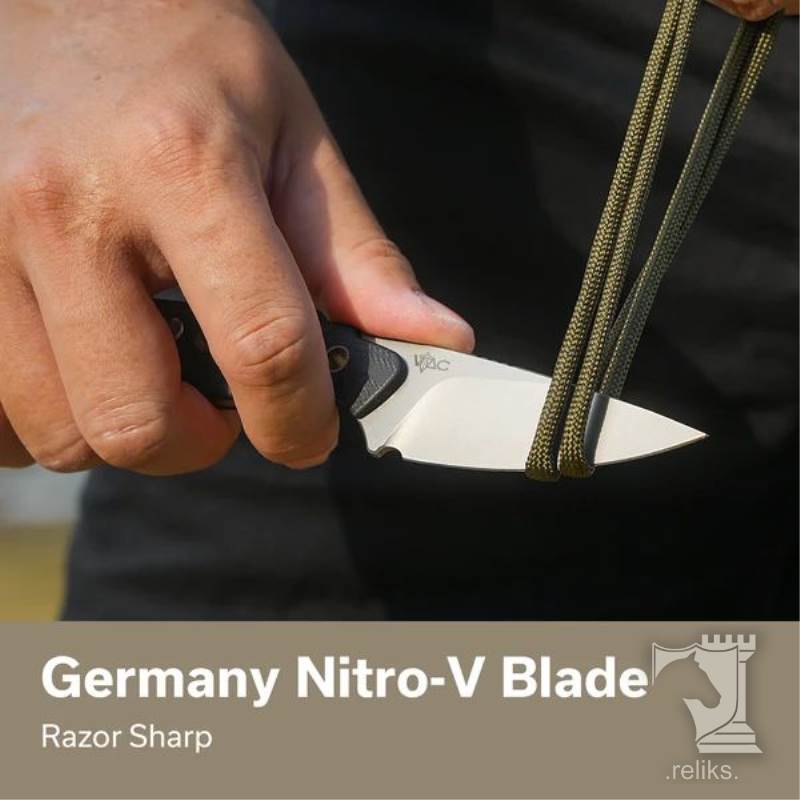
A good pocket knife should stay sharp through everyday tasks, resist rust after getting caught in the rain and sharpen without becoming a weekend-long project
Is Nitro-V Easy to Sharpen?
Ease of sharpening is one of the main reasons people enjoy using Nitro-V. It responds well to common ceramic stones, diamond plates, guided sharpening systems and traditional bench stones.
Because Nitro-V does not contain the large volume of extremely hard carbides found in some premium steels, sharpening tends to be quicker and more predictable. It can also take a very fine, razor-like edge.
This is particularly useful for someone new to knife maintenance. Nitro-V provides enough feedback during sharpening that it is easier to feel when the edge is forming, and it does not usually require expensive equipment to produce good results.
Nitro-V vs D2 Steel
Nitro-V and D2 are commonly compared because both appear on affordable and mid-range pocket knives. They are both capable blade steels, but they offer noticeably different ownership experiences.
D2 is known for wear resistance and can often hold a working edge longer than Nitro-V. The trade-off is that D2 is generally considered semi-stainless rather than fully stainless. It is more likely to stain or develop rust if exposed to moisture and neglected.
D2 can also require more effort to sharpen. Nitro-V gives up a little wear resistance in exchange for much better corrosion resistance, easier sharpening and strong toughness.
For someone who cuts abrasive materials for hours at a time, D2 may have an advantage. For a general-purpose pocket knife that will be carried every day, Nitro-V is often the more forgiving and convenient choice.
Nitro-V vs 14C28N Steel
Nitro-V and 14C28N are closely matched in terms of practical performance. Both are fine-grained stainless steels known for toughness, corrosion resistance and easy sharpening.
Nitro-V is often heat treated slightly harder and is known for excellent edge stability. The additional nitrogen and vanadium in its composition help support its balanced performance.
Sandvik 14C28N has an outstanding reputation for corrosion resistance and has been used successfully by major knife manufacturers for many years. In everyday use, the difference between these steels may be smaller than the differences in blade geometry, edge angle and heat treatment.
Both are excellent choices. A well-designed knife made from either steel should provide dependable everyday performance.
Nitro-V vs CPM S35VN
CPM S35VN is a premium powdered metallurgy steel with greater wear resistance than Nitro-V. In extended cutting tests, S35VN will generally hold an edge longer.
Nitro-V answers with easier sharpening, excellent toughness and a lower cost. It also takes a very keen edge without requiring the same effort that can be needed to sharpen a more wear-resistant powdered steel.
Heavy users who prioritize maximum edge retention may prefer S35VN. Someone looking for a dependable, affordable and easily maintained pocket knife may find Nitro-V more enjoyable to own.
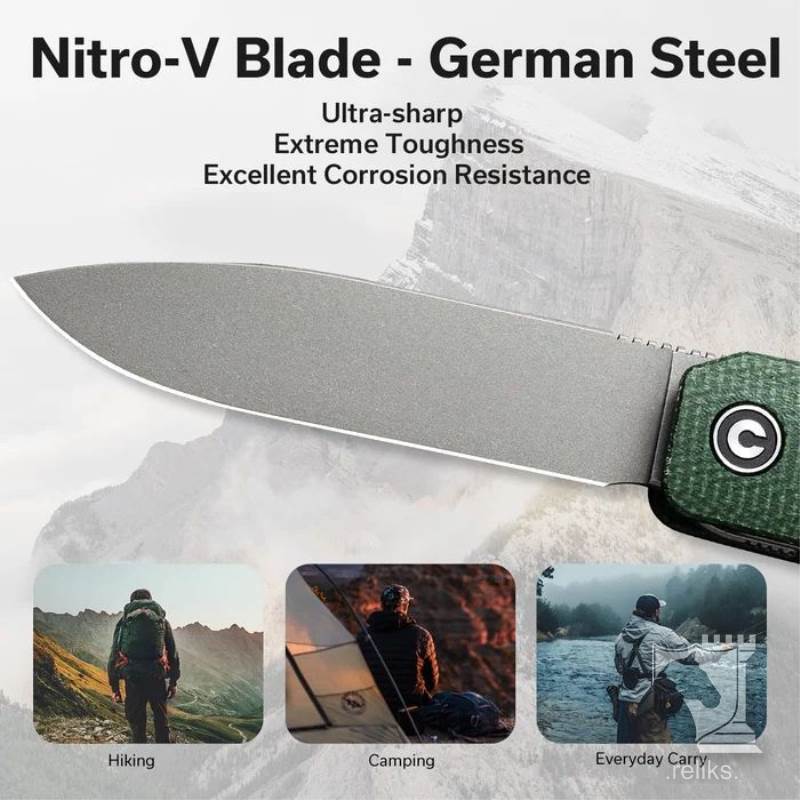
Closely related to the respected AEB-L family of steels, but its chemistry includes added nitrogen and a small amount of vanadium to improve corrosion resistance, edge stability and overall performance.
What Is Nitro-V Best Used For?
Nitro-V is most commonly associated with everyday carry knives, but its balanced properties make it useful in many other designs. It performs well in compact folding knives, work knives, outdoor blades, hunting knives and lightweight fixed blades.
Its corrosion resistance makes it suitable for camping, fishing and humid environments, while its toughness gives it enough durability for more demanding utility work. The fine edge also makes Nitro-V useful for clean slicing and detailed cutting.
In many ways, Nitro-V is at its best when a knife must handle several different jobs rather than one highly specialized task.
Are There Any Disadvantages to Nitro-V?
The main limitation of Nitro-V is that its edge retention is good rather than exceptional. A heavy user cutting large amounts of cardboard, carpet or other abrasive material may need to sharpen it more often than a knife made from a premium high-wear steel.
Nitro-V can also perform differently depending on how it is heat treated. A knife from a manufacturer with a carefully controlled heat treatment may noticeably outperform another knife made from the same steel.
These are not major weaknesses for most users. Nitro-V was never designed to dominate one performance category. Its appeal comes from combining good edge retention with toughness, corrosion resistance and simple maintenance.
How to Care for a Nitro-V Blade
Nitro-V requires very little special care. Wipe the blade clean after cutting food, dry it after exposure to water and avoid storing the knife while it is wet or dirty.
A small amount of knife oil can be applied before long-term storage, particularly in humid conditions, although it is generally unnecessary for normal everyday carry. If the knife will be used for food preparation, choose a food-safe oil.
Touching up the edge before it becomes completely dull will also make sharpening faster and help preserve the original blade geometry.
Final Thoughts on Nitro-V Steel
It is easy to become distracted by hardness ratings, carbide percentages and the latest premium steel. Those specifications can be useful, but they do not always describe what a knife will be like to carry and maintain.
Nitro-V succeeds because it focuses on the qualities most people notice during actual use. It stays sharp long enough to handle everyday jobs, resists corrosion with minimal care, sharpens without frustration and offers enough toughness for a dependable working edge.
It may not outperform every steel in every category, but that is not its purpose. Nitro-V is a well-rounded stainless steel designed for practical knives and real-world use.
Whether you are buying your first quality pocket knife or adding another folder to an established collection, Nitro-V is one of the safest and most versatile blade steel choices available.