KA-BAR: The Story - The Legend
Few knives in history have earned the legendary status of the KA-BAR Fighting/Utility Knife. Born from the fires of World War II and refined over eight decades, it remains a trusted companion to soldiers, outdoorsmen, and survivalists around the world - and it continues to stand as a symbol of reliability for Canadians who value performance over hype.
The Birth of a Legend
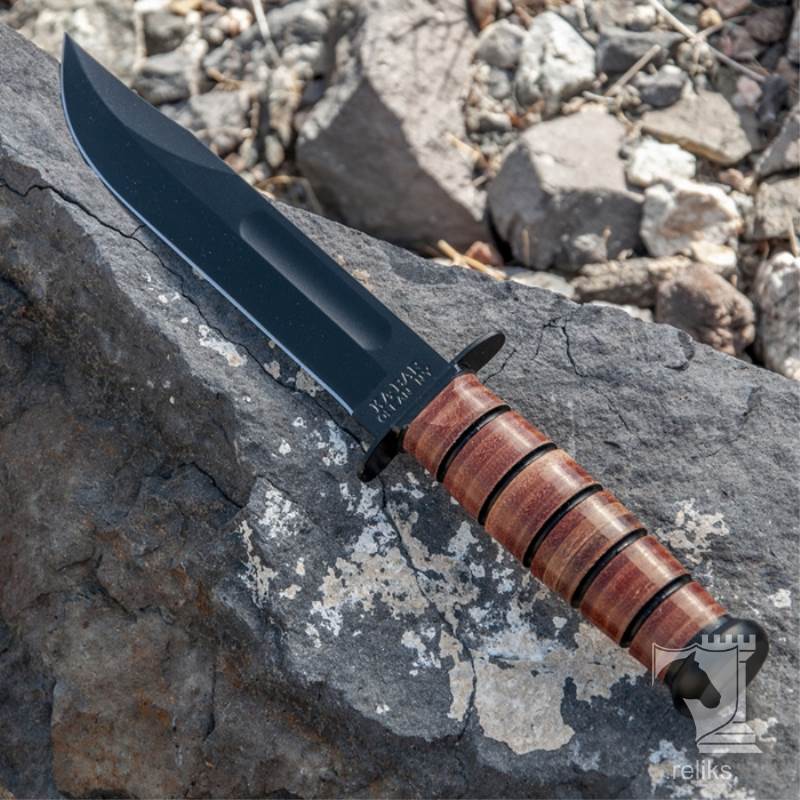
USMC Fighting/Utility Knife
On December 9, 1942, as the Second World War raged across Europe and the Pacific, KA-BAR submitted its fighting knife design to the United States Marine Corps. Working closely with the Marine Quartermaster Department, KA-BAR engineers created a versatile blade that balanced combat effectiveness with field utility. The result was a knife capable of cutting, digging, prying, hammering, and, when necessary, saving lives.
Demand for the new USMC Fighting/Utility Knife quickly outpaced the company’s production capacity. The U.S. government enlisted other manufacturers to produce similar knives, but KA-BAR’s version set the gold standard. By the war’s end, more than a million KA-BAR knives had been produced. They became so synonymous with quality that troops referred to the entire pattern simply as a “Kabar,” no matter who made it.
Forged in War, Respected in Peace
On the front lines, KA-BAR knives proved indispensable. Marines used them to drive nails, open ration cans, hammer tent stakes, and dig foxholes, not to mention in hand-to-hand combat when the situation demanded it. Their reliability made them a staple not only for the Marines but also for the Army, Navy, Coast Guard, and even the elite Underwater Demolition Teams that would later evolve into the U.S. Navy SEALs.
Long after the Second World War, the KA-BAR continued its service. Veterans carried them into Korea, Vietnam, Desert Storm, and even Iraqi Freedom. Each conflict reaffirmed what the Marines had known since 1942: a KA-BAR can be trusted when nothing else will do.
Precision, Pride, and American Craftsmanship
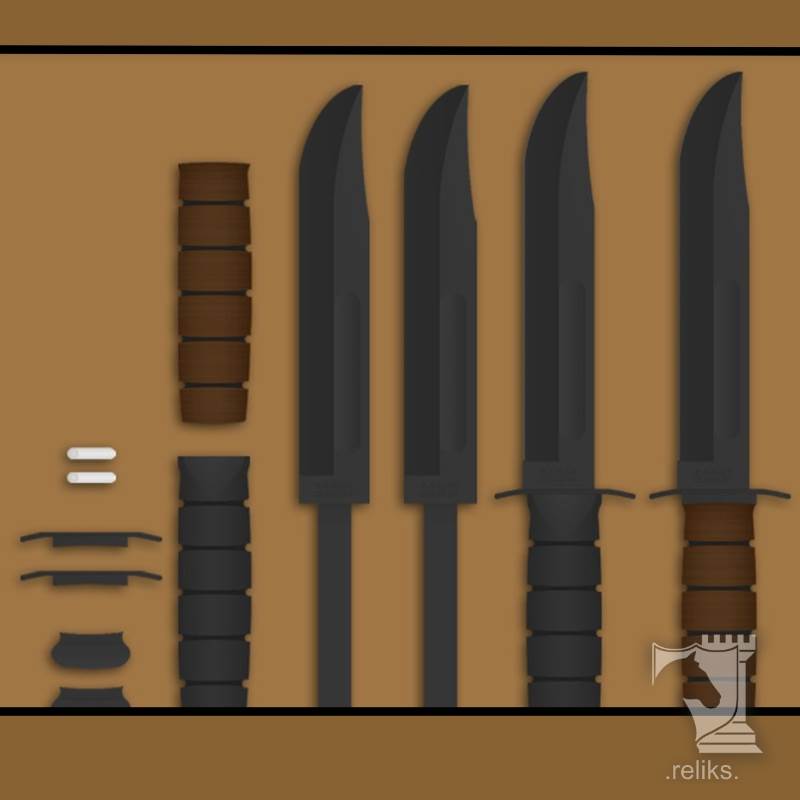
Kabar construction
The dependability of every wartime KA-BAR came from an uncompromising dedication to quality. Every blade that left the Olean, New York, factory passed through rigorous inspection by both company supervisors and military supply officers stationed on-site. That partnership between soldier and craftsman forged a standard few knife makers have ever matched.
The Return of the Original
In 1976, to commemorate the 200th anniversary of the U.S. Marine Corps, KA-BAR reintroduced the Fighting/Utility Knife as a limited-edition commemorative piece. Using the original blueprints and even enlisting some of the same craftsmen who had built the WWII knives, the company recreated the classic in what they called a “full-dress model.” The first serialized knife number 1 was presented to the Commandant of the Marine Corps and now resides in the USMC Museum at Quantico, Virginia.
The overwhelming response from Marines and collectors proved that the KA-BAR’s legacy was far from over. Production of the standard model resumed, incorporating minor improvements made possible by modern manufacturing while preserving the knife’s original look, balance, and battlefield spirit.
The KA-BAR Today
Today, the USMC Fighting/Utility Knife remains a favourite not just among Marines but among adventurers, bushcrafters, and collectors worldwide. Its full-tang design, stacked leather handle, and clip-point blade have become instantly recognizable icons of durability. New generations of KA-BAR knives, from the rugged Becker BK series to TDI tactical models and Dozier hunting designs continue the tradition of functional excellence.
For Canadians, KA-BAR Knives Canada offers the chance to own a piece of that history without the import barriers. Reliks proudly stocks an extensive selection of KA-BAR knives right here in Canada, ensuring quick domestic delivery and local support. Whether for service, survival, or collection, a KA-BAR isn’t just a knife; it’s a proven legend.